Cutfoot Sioux and Lake Winnie Fishing Report August 26, 2025

We’re rolling into the Labor Day holiday weekend and fish migrations into early fall locations have begun. Walleyes are pushing toward shoreline flats, perch are becoming active, panfish and bass are feeding more often, and with greater intensity.
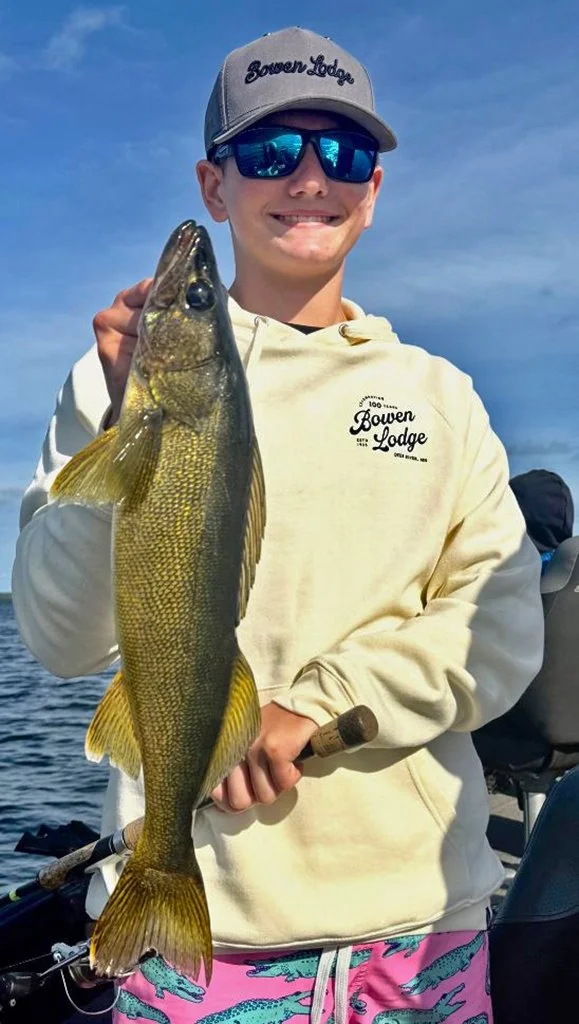
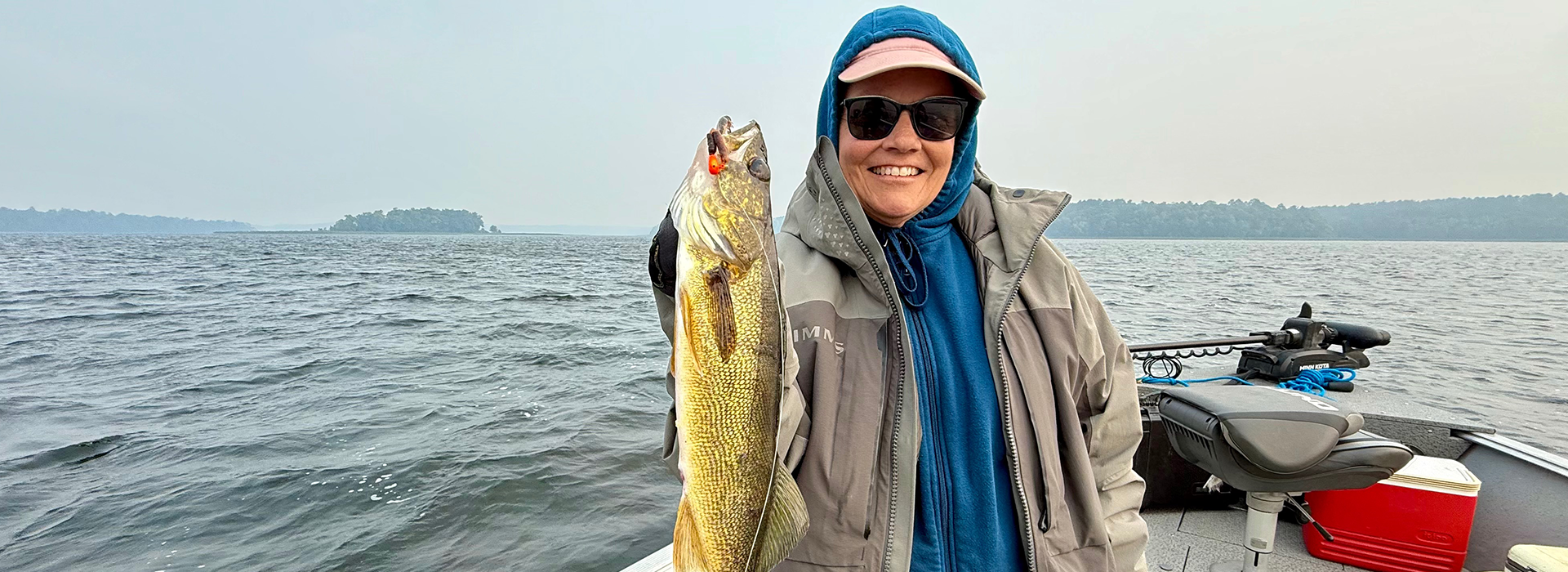
Photo courtesy Reed Ylitalo

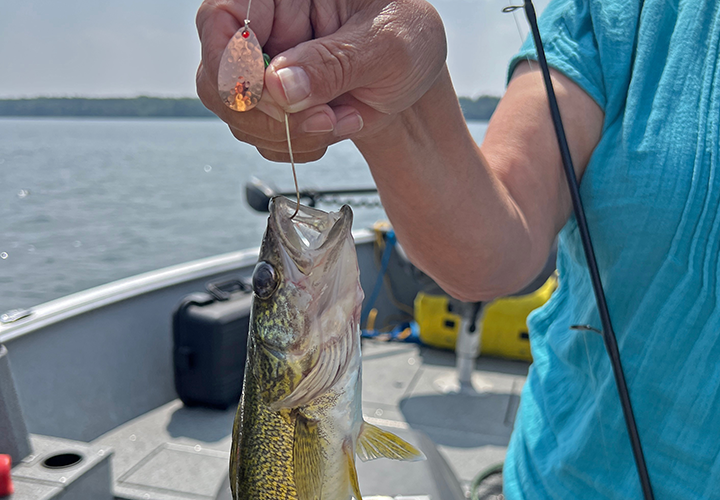
Walleye fishing has been interesting, ranging between very good, and very tough, depending on when our guests try to catch them. When conditions are favorable, like on cloudy, breezy days, they go on the prowl, feeding heavily as they move along shoreline breaks. Common late summer presentations like trolling spinners, wiggle worming and jig and minnow all work well.

But amateurs and pros alike report that calm water, sunshine or post-cold-front conditions grind the daytime action to a halt. Most folks who are fishing during these times report slow going, no matter which presentation they choose.

One way to tip the scales in favor of reliable walleye action is to focus on fishing during the evening, or even after dark. The natural tendency of walleyes to feed more heavily during these times makes catching them easier. Another way to up the odds of catching walleyes is to wait for “the right day”, and fish for them when they’re most active. The previously mentioned cloudy and breezy conditions, aka walleye chop, are well known for providing the best action on Lake Winnie.

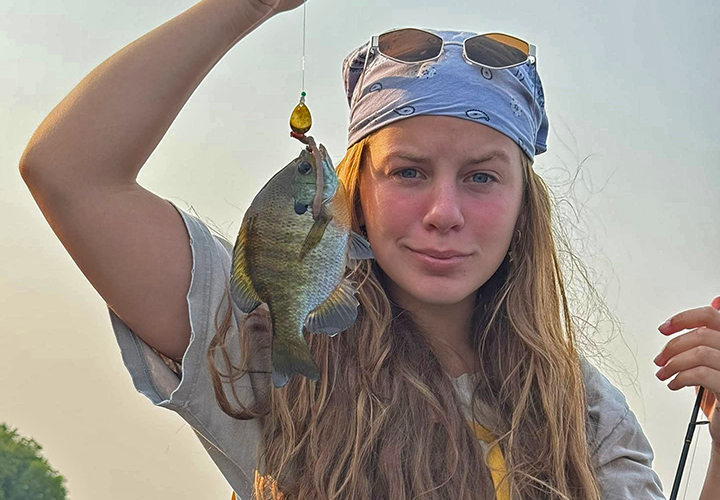
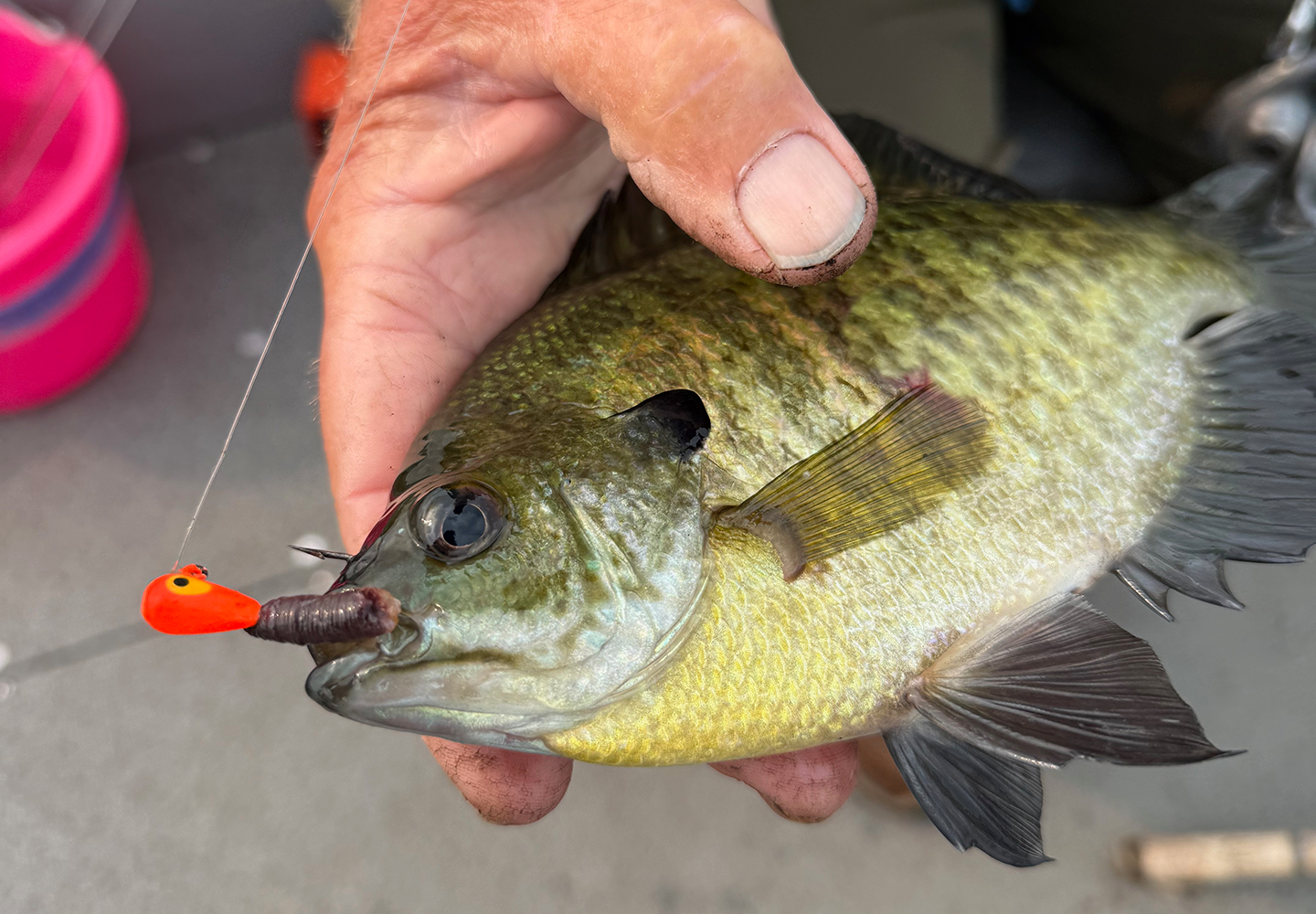
During the off times, there are other species of fish that are more than willing to provide not only action, but excellent table fare as well. Sunfish, most likely the best alternative for warm water, daytime action have been cooperative. The average size of fish has been good, with numbers of harvestable fish in the 8-to-9-inch range. Now, subject to revised limits under Minnesota’s “Quality Sunfish Initiative” there are some fish growing to larger, CPR sizes too. We can’t say that 10-inch sunfish are common yet, but there are enough of them in the system to provide you with a good chance of getting one.
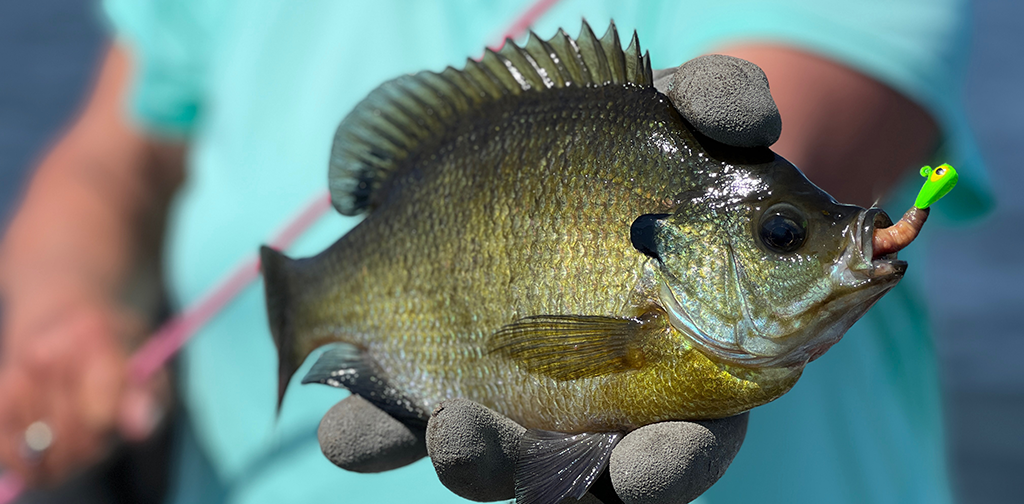
During mid-summer, trolling spinners tipped with leeches or night crawlers is a good search tool for locating sunfish. Water temperatures are cooling though, now holding steady in the 70-to-72-degree range. Trolling can still help you find sunfish, but once they’re located you’ll be better off stopping the boat and fishing more deliberately, using jigs tipped with live bait. Tight lining, dropping the jig over the side of your boat is a good method for catching them. Using floats to suspend your lures in pockets between vegetation can be good too, especially on calm days. Again, small jigs tipped with cut pieces of night crawler work well.

Another great presentation for bobber fishing is to use a plain hook, paired with a few colored beads and a small, flashy spinner blade. Sunfish are curious, and the flashy blade attracts then into the area. Tipping the plain hook with live bait, like small worms, leeches or waxworms trigger them to strike.

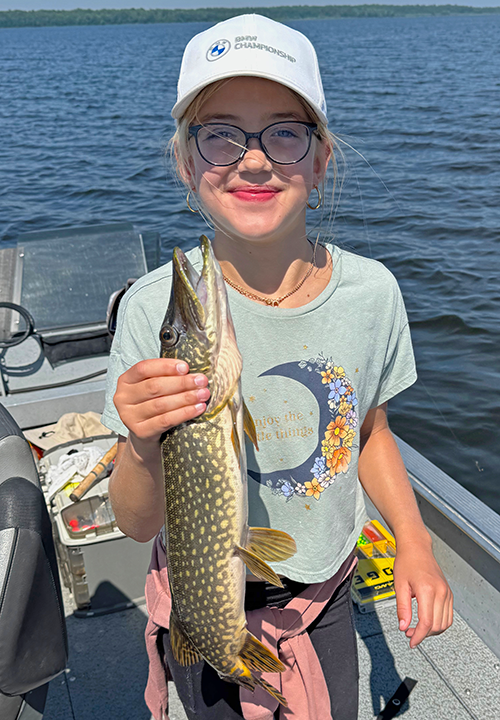
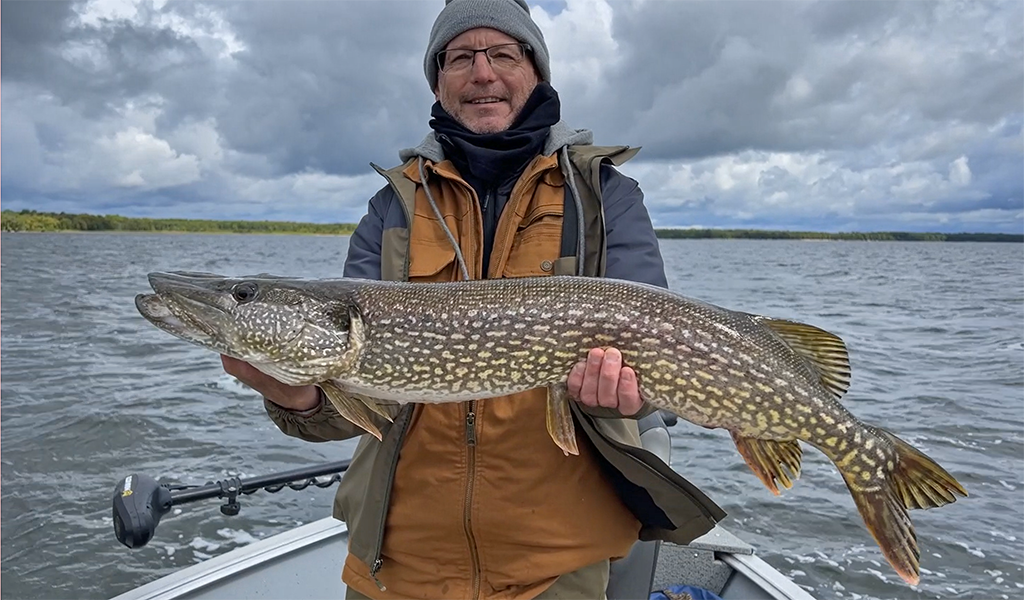
Northern pike, fat and chunky, have been active in recent days and offer good action, and good eating too. Most folks are getting pike as they fish for other species, but late summer and early fall are historically great times to target larger fish. Casting and retrieving large lures, bobber fishing with sucker minnows, or using live bait rigs tipped with large creek chubs are all good choices.

Want a great multi-purpose game plan for chasing late summer pike? Try setting up a drift along one of Winnie’s shoreline breaks in water depths of 10 to 14 feet. As you drift, have one or two anglers casting forward, toward the shoreline using bucktails, large spoons or swimbaits. Another angler or two can slip drift using lively sucker minnows. Use large floats like Thills big fish slider, of similar large bobber set to about 6 feet deep. A ½ ounce egg sinker about 18 inches above a large, 4/0 size hook will hold the minnow in place. Often, pike attracted by the casting and retrieving will follow lures but not strike them. The lively minnows provide an alternative for them, and they are frequently caught by the drift rigs.

Largemouth bass are one fish that we don’t mention often enough. Both Cutfoot and Little Cutfoot offer excellent opportunities for catching healthy, good size bass. Even the big lake has some great spots for bass, and anglers willing to explore the outskirts of the lake in back bays and bulrush patches are amazed by the bass fishing opportunities.

During the early morning, topwater, spinnerbaits and other shallow running presentations are effective. But if you really want to catch bass here, learn how to rig and fish with weedless presentations like Texas rigged plastic worms, jigs and pigs, or large swimbaits. Casting into pockets located amongst heavy vegetation like bulrushes, coontail, cabbage and wild rice will produce quality size fish. Avoid areas of soft-mucky bottom and seek out patches of gravel, or light rocks. Most of the better bass fishing will occur here, where hard bottom and vegetation coexist.
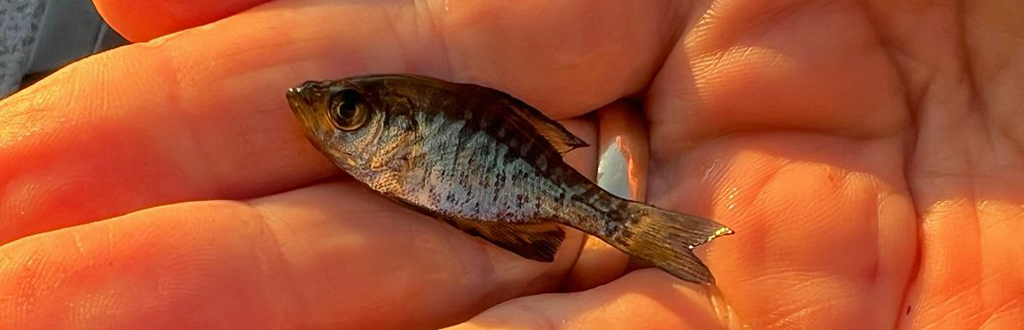
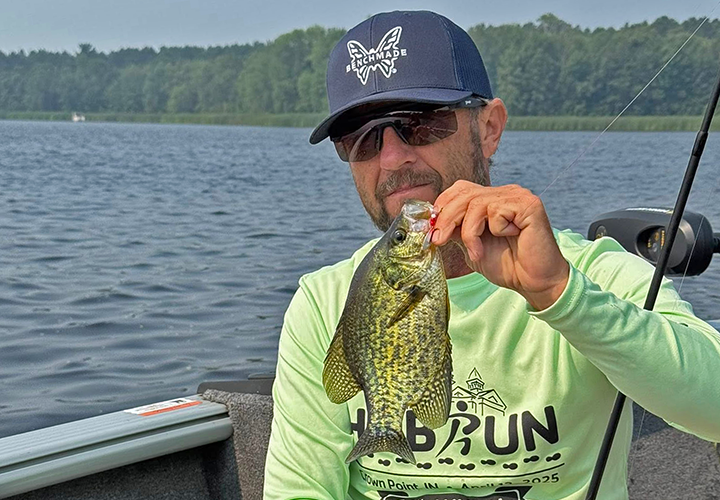
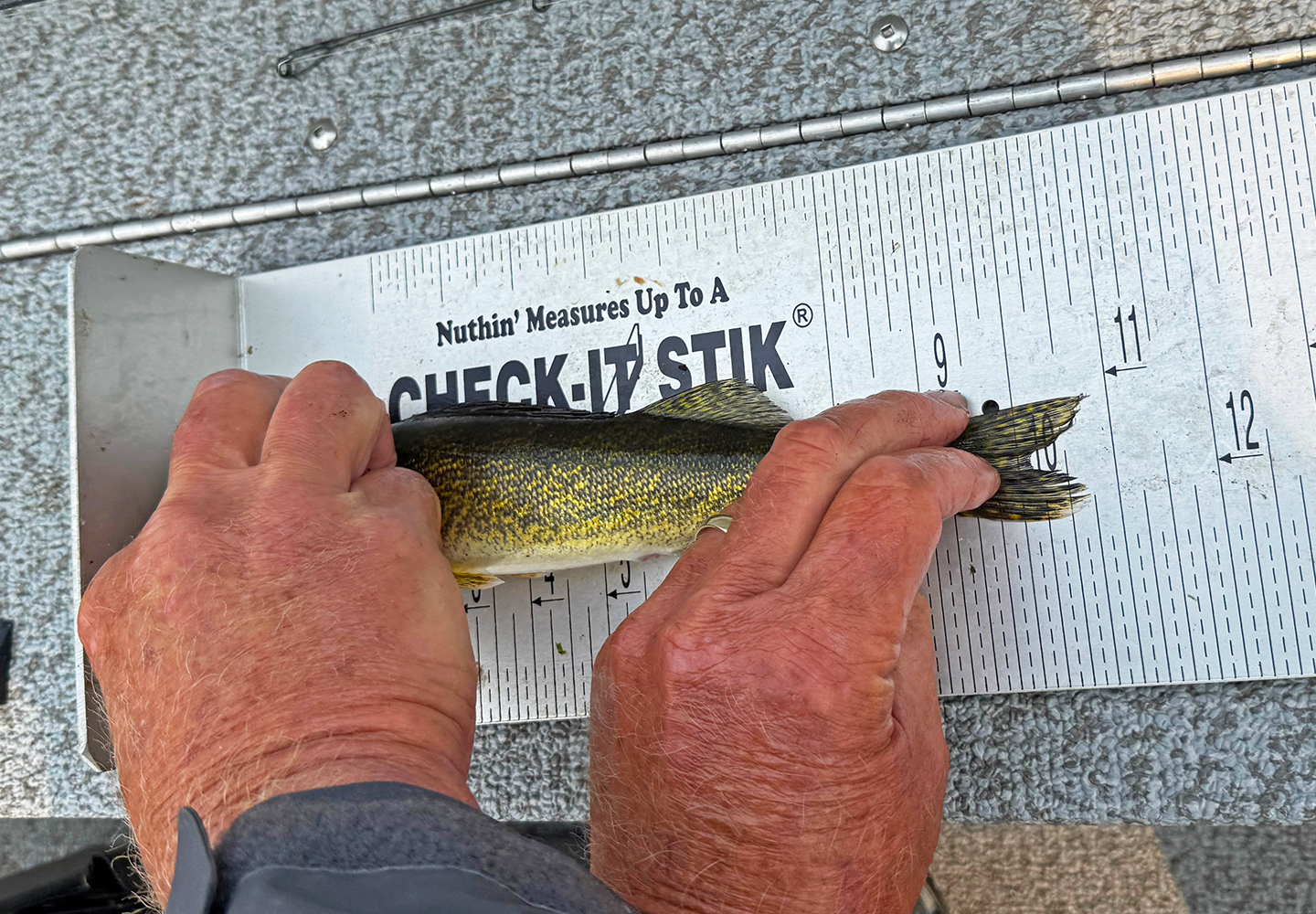
There are crappies out there, and if you run into them, they are catchable. Moving along the shoreline breaks in water depths of 8 to 12 feet using spinners or small crankbaits will catch them. So far, nobody has reported locating large schools, or stacks of suspended fish in typical early fall locations. Will there be? It’s hard to say for sure, but the overall population of crappies appears to remain on the lower end of their range. This little fella, found in front of the boat ramp may be a clue that there was a good hatch this spring, and may well represent a future uptick in the crappie population, let’s hope so!

There are still a lot of perch on the small end of the spectrum, too small for harvest. That said, there are also schools of nice fish roaming the flats and hiding in the cabbage patches. Most of the better perch catches come from shallow water, back bays like the Third River, Raven’s Flowage, and Tamarack Bay. Trolling spinners tipped with minnows along the shallow patches of cabbage is a good search method. Once located, jigs tipped with either minnows, or a 2 inch long chunk of night crawler will help you gather a meal.

As fall sets in, begin checking areas of shallow rock and gravel on the big lake. It won’t be long before good catches of perch will come from shallow, 3 to 6 feet of water, especially on breezy, dark days. Shallow cabbage located near bulrush patches will begin producing perch soon too, so start checking areas like these as well.

Is that you saying, “I don’t care about any other fish, I just want walleyes”? Well, okay then, you’ll probably be in luck soon enough. Early every fall, we experience an uptick in the walleye action, and it does appear to be happening already. Like we said, the daytime action depends on weather conditions. Our best advice is that when it’s bright and flat, bide your time and wait to fish during the evening. When the wind starts blowing, get in the boat and go, when conditions are favorable, guides, guests and friends are reporting good walleye action right now.

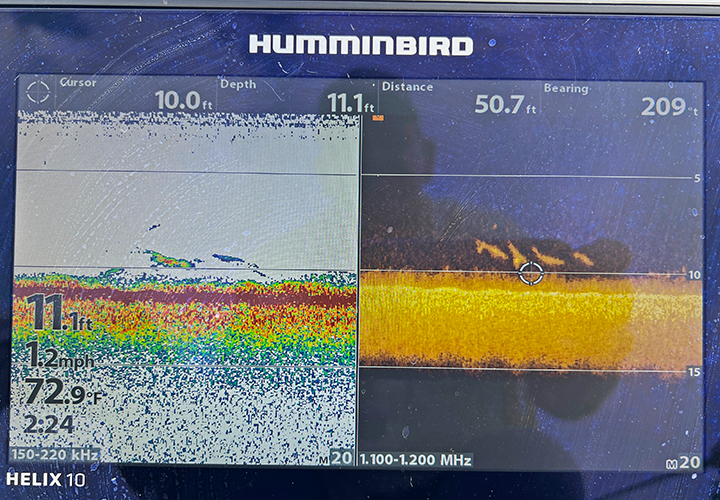
Trolling spinners tipped with minnows has been reliable, so has trolling with crankbaits. Folks who have forward facing sonar are catching fish using slip floats tipped with leeches. Jigs and minnows are being used effectively by some anglers now too. Getting good minnows has not been easy, but find some golden shiners, rainbows or the largest fatheads you can get, they will work, at least for the time being.

Labor Day marks the transition between the family vacation period, and the arrival of more serious anglers. As the fishing traffic intensifies, we’ll keep you up-to-speed about walleye migrations, fishing patterns and the best presentations. Stay in touch, we’ll be here for you. And by the way, if you’re in the area, stop by the lodge for a visit, we’d be happy to let you in on the freshest news from the lakes.

Winnibigoshish, Cutfoot Sioux, Walleye, Pike and Panfish Report August 8, 2025

Summer fun at the beach far surpasses the pursuit of fish this week. Warm water, sunny skies and calm seas have encouraged our guests to take advantage of the chance to relax on the lake. Still, there are a handful of anglers angling, and for them, results have been mixed.

Autumn Braidey with a 27 inch walleye

 Walleye fishing has been both time, and weather dependent. Early morning, or late evening, along with cloudy and breezy days find walleyes active and catchable. Sunshine, calm seas and warm water temperatures send them into the doldrums, and they seemingly disappear.

 It can be tempting to use the term “not biting” to describe walleye activity. But biting too well, that is more likely what the problem is. With surface temperatures now ranging between 75 degrees in open water, and 79 degrees in protected, dark water bays and flowages, fish metabolism is running hot. At the same time, food supplies are at their peak and that adds up to easy pickings for active walleyes.

During prime time, walleyes go on the prowl and get all the food they need in short, intense feeding bursts. With stomachs full of food, walleyes simply sit out the periods when conditions do not favor productive feeding. This helps explain why it can be easy to view fish on electronics, but difficult to tease them into striking.

Folks who have fished Winnie for a long time know that this situation is about to change.

With every day that passes, predators consume more baitfish. Insect hatches run their course too, further reducing the available food supplies. Sometime during the next few weeks, reduced food supplies, combined with the early influences of fall will begin shifting the balance. More walleyes will compete for less food, and they will become more vulnerable to angling.

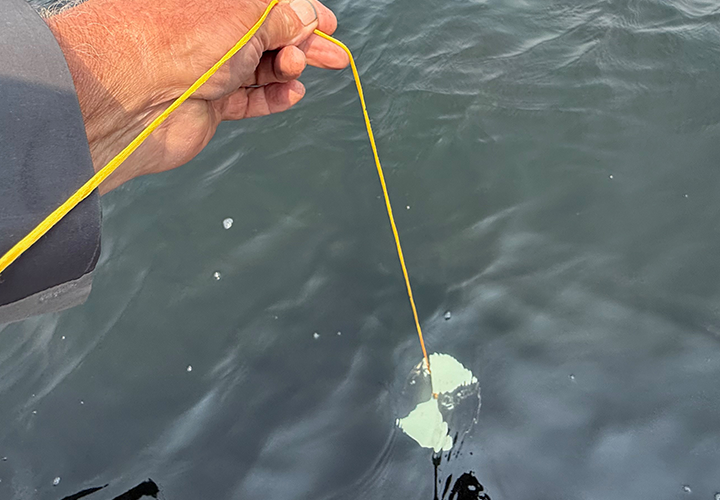
Last week, we mentioned that the Secchi disk reading, taken offshore on Winnie was about 11 feet. Today, thanks to heavy algae blooms, the water clarity is reduced even more. Now we’re looking at water clarity of 8 to 9 feet on the main lake, even less in the dark water flowages and shallow, weedy bays. The reduced clarity, added to walleyes natural instincts to feed will help improve daytime fishing action.

 At the time, we wrote, “For now, finding vegetation is one secret to consistent fishing action. Heavy growth, like stands of cabbage and coontail hold perch, sunfish and pike. Less dense stands of submerged plants like flat stemmed pondweed, and other pondweed varieties are holding some crappies, more pike and at times, walleyes.” This advice remains good for folks seeking a mixed bag of “eating size” fish. Finding patches of vegetation, no matter the depth, will be the key to fishing success in the coming days and weeks.

Folks searching for larger fish to catch, photo and release should search for them on the lake’s larger bars. All the names you’ve heard before are in play, Moses Bar, Horseshoe, Bena, Center and Sugar are holding fish. There are fish on some of the larger free-standing humps too, but the smaller ones are less populated with walleyes now.

Spinners, tipped with minnows or night crawlers continue to produce not only walleyes, but pike, perch and panfish too. Spinners will be a mainstay presentation for anglers, as long as water temperatures remain warm. Fishing spinners in deep water require bottom-bouncers, or other heavier weights. In 20 to 25 feet of water, 2 to 2-1/2 bouncers will be ideal. In shallow water, use bullet sinkers in the 1/8 to ¼ ounce range to keep your spinners running above the weed tops.

There are more folks trolling crankbaits on the big lake these days. They are targeting fish that spread out across the flats or spread out horizontally along the secondary breaklines along shore. Key depths range from 12 to 18 feet of water, so crankbaits that run 8 to 12 feet deep are ideal. For some, using planer boards to keep lures running away from their boats is effective. Planer boards, if you have them, can also be used successfully when trolling spinners as well.

Wiggle worming has been a productive presentation for folks who targeted walleyes on Cutfoot Sioux. So has Lindy Rigging with lively leeches, or air injected night crawlers.

Jigs and minnows, while not the favorite crowd during mid-summer are being used by some and have been productive. The best times to try jig and minnow presentations is when there’s a good breeze for drifting. Whether you fish them in the weeds, or over the rocks, they will produce a mixed bag of fish. Getting good minnows is not easy right now, but some of the bait shops offer golden shiners, and others have a “river mix” that includes several varieties of minnows. Select minnows in the 3-to-4-inch size range, and you’ll be okay.

Crappies remain somewhat illusive, but there are more catches being reported now, than there were earlier this summer. Like walleyes, they have been much easier to catch during low-light periods, and we suggest fishing during the early morning. On a calm and quiet morning, baitfish and predators too, can be seen working over the tops, and along the edges of cabbage and coontail beds. Casting spin-jigs like beetle spins or throwing small jigs tipped with plastic tails are productive. A 1/16 or 1/8 ounce live bait jig tipped with ½ night crawler can also be deployed, and will produce a mixed bag of walleye, crappie, sunfish and more.   

Anglers complain about a lot of small perch in the system right now. It is true, there are legions of perch in the 5-to-6-inch size range, and recently they have been all too willing to strike. Today’s problem is tomorrow’s solution though, and with all these young perch in the system, we will be enjoying some great perch action in another season or two. In the meantime, there are isolated pods of good size perch, and they are biting. Vegetation like eelgrass, and wild celery seem to hold the better size fish right now, but on windy days, they will roam shallow rock and gravel structures too.

For perching, use spinners tipped with minnows to search for fish. When located, stop and fish with jigs and minnows, lindy rigs with minnows or jigs with cut pieces of night crawlers.

Some folks prefer to focus on northern pike, and we’re seeing an uptick in pike angling, mostly on the big lake. Shoreline patches of cabbage, coontail and pondweeds are holding fish, and are targeted by most. Casting, using jerk-baits, paddle tails and large swim baits has been effective. Trolling with shallow running stick baits, like large rebels, Rapalas and Smithwick’s are productive. Large boobers used to suspend sucker minnows of the weed tops are effective too. When drifting is an option, one angler can watch a bobber while another one, or more, casts for pike.

Alternatives to working the shallow vegetations include trolling crankbaits on the flats, and lindy Rigging with large minnows on the steep drop-offs along mid-lake bars.

Sunfish remain active, and with the warm water, can be easily located using spinners tipped with either night crawlers or small leeches. Toll the edges of vegetation until bluegills are located, then stop the boat and use small jigs tipped with cut pieces of night crawler. Using clip on floats to hold your bait in place can be effective. Also, tight lining with small jigs will be effective. Drop your offering over the side of the boat, hold your rod tip steady and wait for a light tick.

We encourage you to participate in the Minnesota DNR Fisheries Walleye Bag Limit Reduction Proposal Survey. Minnesota DNR Fisheries Chief, Brad Parsons, announced his plans to go forward with a statewide walleye possession limit reduction. The deadline for participation in the online survey is August 15, 2025, and this is your last chance to influence how the formal proposal will be offered.

The official period to receive public comments will come once the formal proposal is introduced. At that time, anglers will have an opportunity to say yes, or no, to whatever formal rules are set into motion.

Regardless of your point of view, be sincere and let the DNR know what it is. We also suggest that you be prepared to make additional comments when the regulatory public comment period begins.

July 25, 2025 Lake Winnie and Cutfoot Sioux Fishing Report

The news of the week on both Lake Winnie and Cutfoot Sioux are the heavy rains that saturated bogs, and backwater lowlands. As a result, there has been a steady increase in the flow of water from small reivers and streams. With the increase in warmer, nutrient rich water flow comes a decrease in water clarity.

The Secchi disk reading, taken offshore near Raven’s Point on Thursday was 11 feet. Still clear by historic standards, the 11-foot reading represents a full 50% reduction from the 22-foot water clarity we reported back in early June 2025. That’s good news for anglers who have battled ‘boat shy” walleyes, pike and panfish. Reports of sighting fish on electronics, and catching them, in shallow 10-to-12-foot water depths is encouraging.

Walleyes held, and were caught in shallow water thanks to declining water clarity

In the aftermath of thunderstorms that affected our region on Wednesday, perch, pike and walleye action was sluggish. That said, there were still some “catchable fish” and that’s a good sign, we think. If fish bite on the days when they’re not supposed too, action is more likely to be good when weather conditions are favorable.

For now, finding vegetation is one secret to consistent fishing action. Heavy growth, like stands of cabbage and coontail hold perch, sunfish and pike. Less dense stands of submerged plants like flat stemmed pondweed, and other pondweed varieties are holding some crappies, more pike and at times, walleyes.

Surface temperatures rose into the mid-70s during mid-July. But this week they declined and ranged between 70 to 73 degrees as of 7-24-25. The decline in water temperatures is likely to mean that we’ve already seen the warmest conditions of the season. Affected by cooling temperatures, trolling presentations now produce fewer sunfish, rock bass and other “warm water species”. Spinners, tipped with minnows will continue to produce walleyes, pike and perch though, and remains a mainstay presentation for many anglers, especially those who fish on the big lake.

Spinners tipped with live bait is an effective trolling presentation on Lake Winnie

We reported that wiggle worming had been a productive presentation for folks who targeted walleyes on Cutfoot Sioux. Alternative presentations like Lindy Rigging with lively leeches and air injected night crawlers have produced walleyes too. In the fish cleaning shack, one pair of walleye fishermen said, “our catch, 7 keeper walleyes and a half dozen keeper sunfish wasn’t bad, but we did have to put up with a lot of small perch.”

It is true, there are a lot of small perch in the system right now, and they are very good at attacking baits that are intended for other game fish. The gamefish though, walleyes, are feeding on those small perch. So, putting up with the unwanted attention from little perch is unfortunately part of the secret to success in catching walleyes.

Some anglers report that using large swim baits is one alternative to live bait, and a remedy for pesky perch syndrome. Casting to the edges, pockets and gaps in shoreline vegetation with 1/8 to ¼ ounce jigs tipped with 3-to-4-inch plastics will work. Use a steady swim-drop, swim-drop retrieve, allowing your lures to work deep into the cover. Paddle tails, shad imitators and jerk baits are good, bucktail jigs have been gaining in popularity too, experiment and let us know how they work for you.

Last week we wrote, “Walleyes during mid-summer often find small spots of hard bottom structure within stands of vegetation.” Focus on these small, spot-on-a-spot locations and your productivity will rise. In case you missed it, or need a refresher, read our fishing report July 13, 2025.

Mid-lake structures are always popular spots for locating and catching walleyes during mid-summer. During late summer, we expect to see a shift away from the smaller, isolated “humps”. Walleye populations tend to build up on the lake’s larger bars like the Bena Bar, Horseshoe, Moses, Center and Sugar. Watch for schools of walleyes along the edges, where shallower water meets the lakes deeper basin. The most active fish will hold high along the edges or even spread out across the tops of these massive structures. Key water depths are 14 to 24 feet.

Trolling spinners, combined with bottom bouncers will allow for efficient searching. Once located, use Lindy Rigs and Live bait, slip floats or again, cast jigs tipped with swim jigs or paddle tails. Some folks prefer to focus on northern pike, and for them, trolling large crankbaits is effective. Use lures that run 10 to 12 feet deep and focus on isolated patches of gravel or rock on top of the bars.

Walleyes from the 2023 year class are growing, and now range from 12-1/2 to 13-1/2 inches

We’ve been following and reporting on the progress of walleyes from the 2023-year class. Observations from guests and friends on the lake continue to support the notion that there are a decent number of fish from that year in the system. Now measuring at 12-1/3 to 13-1/2 inches, the young walleyes promise to provide some “keepers” soon. We’ve long suggested following a voluntary guideline of 14 inches before harvesting, and its likely fish in that size range will be available later this fall. Harvest sparingly now, and the season outlook for 2026 should be a good one.

Perch fishing has been spotty for our guests this summer, but catches are somewhat more consistent now. Numerous reports of perch feeding on adult crawfish have been coming in. To find larger perch, 10 to 11 inches in length, seek out areas where vegetation and gravel or light rocks are combined. Picture structures where crawfish thrive, and you will have the recipe for location of keeper size perch as well.

We mentioned earlier that there is a strong population of young yellow perch in the system right now. Pesky as these small fish are right now, they will mature, and when they do, better fishing for quality size perch will be available. We’re looking forward to that!

Recently, we reported an announcement by the Minnesota DNR Fisheries Chief, Brad Parsons, about his plans to go forward with a statewide walleye possession limit reduction. Presently set at 6 walleyes, the new limit, if enacted, would allow our guests and visiting anglers to return home with 4 walleyes instead.

We encouraged you to participate in an online survey aimed at gauging public opinion about the rules change. We reported too that the deadline for participation in the online survey is August 15, 2025, and that is true. However, an advisory from our friend Gerry Albert, retired large lake specialist for Lake Winnie, cautions against believing that this survey deadline constitutes the end of an official public comment period.

“The official period to receive public comments will come at a later time”, Albert says. “This survey is only intended to measure public sentiment. So, while it may serve to shape, or fine tune the language used in the official rules’ proposal, the survey does not constitute any official assembly of public commentary about the proposal.” Albert concluded.

We still encourage you to click the image or follow this link to the >> Minnesota DNR Fisheries Walleye Bag Limit Reduction Proposal Survey. Regardless of your point of view, be sincere and let the DNR know what it is. We also suggest that you be prepared to make additional comments when the regulatory public comment period begins.

Cutfoot Sioux, Lake Winnie Fishing Report July 13, 2025

The scene was quiet at the marina this Saturday morning in preparation for our guest roster to change over to a new week. But even as we hustled to facilitate “change over day”, friends of the Bowen Lodge family were out on the lake, checking the fishing conditions for our upcoming week.

“Changeover Day” Bowen Lodge Marina Saturday July 13, 2025

First off, a moderate west wind brought in both cooler temperatures, and another round of hazy conditions caused by forest fires burning in west central Canada. The darkened sky, combined with a light-to-moderate algae bloom in the water, helped spur fish activity in both Lake Winnie and Cutfoot Sioux.

Secchi Disk Reading 10 Feet Deep, Cutfoot Sioux Saturday July 13, 2025

Surface temperatures have been on the rise this week and were hovering around 75 degrees on Saturday morning. Caused both by warm and sunny temperatures, and an increased water flow because of the recent rainfall, the added warmth has brought on some additional algae blooms. The Secchi disk reading in Cutfoot Sioux was 10 feet deep on Saturday morning. Still clear by historic standards, but far better (for fishing) than the 18-to-20-foot readings we saw early this summer. The added turbidity makes less wary and somewhat easier for anglers to approach and catch.

Vegetation, especially in Cutfoot Sioux continues to mature. Fish holding plant varieties like cabbage, coontail and flat stemmed pondweed are green, lush and growing deep. Anglers with a long history of fishing Cutfoot Sioux will recall the days when finding a cabbage bed deeper than 8 feet was a chore.

 These days, we see plant life flourishing in water depths down to 14 feet of water, even deeper in some regions of the lakes. Wild rice beds now stand tall above the surface, and bulrush patches are green and mature too. The heavy vegetation isn’t always loved by anglers, but it is loved by gamefish. So, embracing fishing presentations that target the thick vegetation will pay off from now, on into the early fall.

Wiggle Worming For Walleyes on Cutfoot Sioux

Last week we reported that some of the popular trolling presentations were coming to their peak of effectiveness. Fishing with spinners tipped with live bait produced mixed bags of walleye, pike, perch, rock bass and sunfish. On Saturday, trolling spinners tipped with night crawlers were used to search for fish, but once located, wiggle worming was the preferred presentation used to drill into the habitat and catch both walleyes and sunfish; here’s why.

Sunfish, especially when water temperatures are warm, will strike spinners readily. But because of their nature, bluegills typically gather tightly, in compact schools adjacent to their preferred feeding structures. So, once it’s located, it’s a good idea to stop trolling, slow down, and use live bait jigs tipped with worms, leeches or cut pieces of night crawlers to catch them.

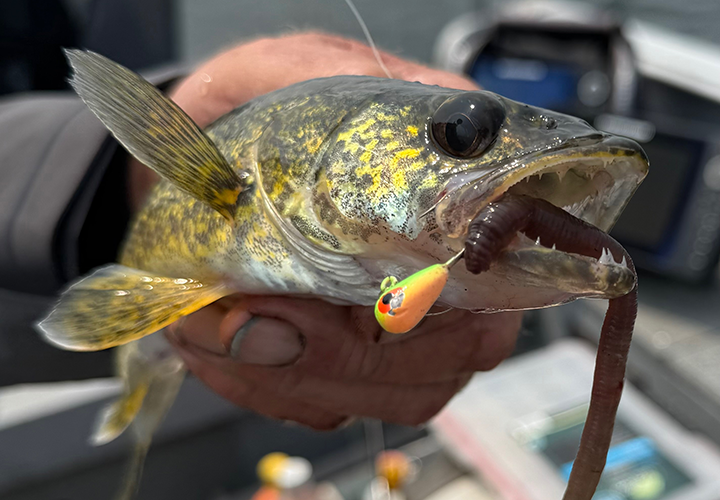
Wiggle Worming produces walleyes, but quality sunfish love the presentation too.

Walleyes during mid-summer often find small spots of hard bottom structure within stands of vegetation. While trolling presentations still work, they become less efficient because the spinners are only in the fish’s strike zone for a short time. Targeting the isolated, and sometimes small “hard spots” with slower moving, more methodical presentations is more efficient. So, on small spots located adjacent to or within the cabbage patches, slowing down and using live bait approaches like wiggle worming is a great idea for walleyes.

Combine walleyes, with sunfish and you have a great opportunity for mixed-bag catches. And if you like, presentations like slip-bobbers, vertical jigging and casting small jigs tipped with plastics will also produce fish using these, and similar structures.

Wiggle Worming Walleyes

Wiggle Worming walleye on Cutfoot Sioux July 12, 2025

If you’re not familiar with the wiggle worming presentation, you should be. Instead of using valuable time to go through the details here, we’ll suggest that you follow this link to a resource that walks you through the presentation in full detail. Read article “Wiggle Worming 101”.

On the big lake, trolling presentations remain effective too. In last week’s report, we offered tips about fishing with spinners both on the flats, and over the tops of cabbage patches. The guidance hasn’t changed, and it’s a good idea to review the previous report for a refresher course. Follow this link to the >> Bowen Lodge Fishing Report July 3, 2025.

Mid-lake structures continue to be popular spots for locating and catching walleyes during mid-summer too. We hear from local guides and some of the better walleye anglers who stay here seasonally, that they continue catching fish on these structures. Because many of the spots have been targeted repeatedly, many of the “keeper” size walleyes have been strained off, and that the proportion of fish in the “protected slot” is rising. So, carefully releasing these fish, especially now when the water is warm, is important.

Numerous small walleyes caught in Cutfoot Sioux and Lake Winnie: An indication of good 2023 year class?

The size structure of 2019 Lake Winnie walleyes, as we reported in our 2025 Lake Winnie and Cutfoot Sioux Season Outlook, has shifted heavily into the protected, 18-to-23-inch protected slot. Late last summer, guests and friends were fishing the big lake reported catching good numbers of small, 9-to-10-inch size walleyes. Again, this summer, we are beginning to see decent numbers of these small fish turning up in both Winnibigoshish and Cutfoot Sioux.

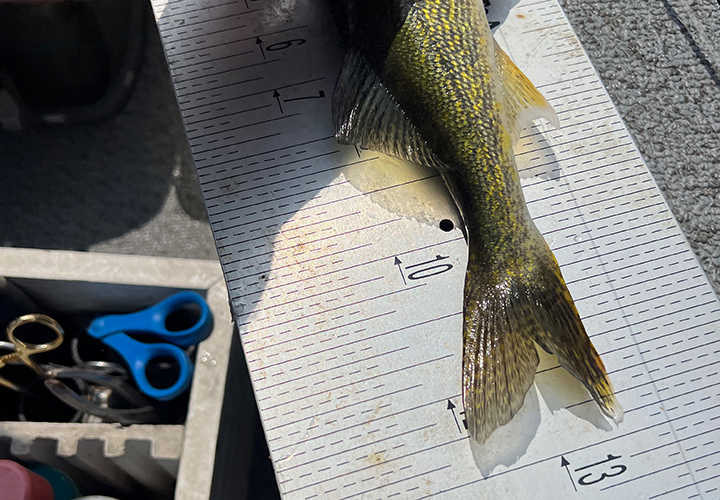
This fish, measuring almost 11 inches, is like from the class of 2023 and offers a sneak preview into what may be another good year of up-and-coming walleyes. As we enter the summer lake survey testing season, we’ll get frequent updates from the DNR Fisheries staff and will keep you in the loop as new discoveries are reported.

Perch fishing has been spotty for our guests. The better size perch, 10 to 11 inches, are available but show up in random locations, and appear to be nomadic. Our best advice is to use your opportunity when it comes along. If you’re fishing an area, and begin catching some keepers, drop whatever you were doing and focus on perch for the moment. Often, returning to the same area at a different time, or when conditions change, will be disappointing.

It is not disappointing that there appears to be a lot of young yellow perch in the system right now. As these small fish mature, we will enjoy better fishing for quality size perch. We’ll make a point of getting an update about perch populations, and growth rates for an upcoming report.  

Crappies typically become easier to catch using trolling presentations during late summer. So far, few of them have been reported, and do not appear to be present in large numbers. Appearances can be deceiving though, and there could be lots of fish hiding in some of the dense patches of cabbage. As always, we advise you to search for crappies during the lowlight periods during early morning and late evening. Crappies often reserve their feeding spurts to these crepuscular periods and can be very easy to catch when they want to be.

We see an increase in activity among northern pike anglers recently. There are more folks casting large lures over the vegetation, on the rocks and along the steep, mid-lake breaklines. While catching numbers of eater size pike, below the 22-inch threshold using the popular trolling presentations is effective, casting large lures will produce more large fish.

Large pike can be particular at times, and often one presentation will outperform another. Large spinnerbaits, in-line bucktail spinners, jerkbaits and large plastic swim baits can all be productive. Experiment with each, and change as fish feeding preferences vary. During high, sunny skies, use large, lively minnows suspended below slip-floats for better action. On cloudy, or drizzly days, pike will move high above the vegetation, and shallow running lures will become more effective.

Last week, we announced that the Minnesota DNR Fisheries Chief, Brad Parsons plans to go forward with a statewide walleye possession limit reduction. Presently set at 6 walleyes, the new limit, if enacted, would allow our guests and visiting anglers to return home with 4 walleyes instead.

August 15, 2025, is the deadline for all of us to participate in the online survey, click the image or follow this link to the >> Minnesota DNR Fisheries Walleye Bag Limit Reduction Proposal Survey. Regardless of your point of view, be sincere and let the DNR know what it is. This is the only way that they can make the best decision; one which will affect all of us who fish for walleyes, long into the future.

Bowen Lodge Fishing Report Independence Day Weekend July 3, 2025

Lake Winnie, Cutfoot Sioux and Connected Waters Walleyes, Pike, Perch and Panfish Report

We are heading into the Independence Day holiday weekend on a warm note. And as the sunshine warms the waters of Lake Winnie and Cutfoot Sioux, productive summertime fishing patterns for walleye, perch and panfish have taken hold.

Oliver Goodwin with one of his many “First Ever Walleyes” Lake Winnie, July 1, 2025

Surface temperatures on the big lake range from 71 to 73 degrees, and back bays with darker, calmer waters are running warmer, 74 to 76 degrees in some areas. Vegetation is maturing too, cabbage, coontail and many of the “pondweed” varieties are green and thick. Wild rice beds are starting to stand tall above the surface, and bulrushes are green and mature too. All plants, no matter where they grow, provide cover habitat for fish of all species, including the most popular game fish pursued by our guests.

During the warmup, insect hatches began emerging and hatches of many insects continue today. Fishing for walleyes during any “bug hatch” can be challenging, but in many ways can be rewarding too. Finding the areas where maturing insect larvae is most likely to emerge will lead anglers to success. Where maturing larvae exists, minnows, small gamefish and predators will be nearby; all participating in the “summer peak” food chain cycle.

Mayfly hatch, still occuring, but winding down on Lake Winnie 7-1-2025

Marl, the mixture of semi-soft, clay, sand and shell pieces are prime real estate for bloodworms, fish flies and mayfly larvae breeding grounds. Marl can be located anywhere, and in every water depth from 0 to 40 feet, but on Lake Winnie, mid-lake humps, and sprawling flats are 3 key regions to search.

·       On “the humps” the hard sand or light rock in 14 to 20 feet of water, transitions to softer, often marl bottom. Look for the transitions in water depths of 18 to 26 feet. On your electronics, the “hardness” of your bottom reading will reveal these transitions in one way. Another way to detect these regions will be locating large masses of food that appear grainy, and cloud-like.

·       On the flats, patches of hard sand and gravel, or light rocks will appear as bright spots on your sonar. The soft bottom patches of marl surrounding the “hard spots” are key areas for feeding fish. Again, locating large masses of food that appear grainy, and cloud-like will be key to finding predator fish on the flats.

·       Vegetation that is located closer to the shore can also be found in areas where marl is present. Even where plant life provides its own form of habitat, the presence of marl improves their fish attracting capabilities even more. Often, the type of plants dictates the species of fish found in them. Cabbage for example is prime territory for pike, crappies and at times, walleyes. Flat stemmed pondweed, eel grass and wild celery all provide ideal fish catching habitat popular gamefish species too.

Sam Goodwin with nice Lake Winnie walleye July 1, 2025

Trolling presentations are coming into their peak of effectiveness now. Families, like the Goodwins (pictured throughout), have fished this week using spinners tipped with minnows and caught a mixed bag of walleyes, pike, perch and rock bass. For Sam and Oliver Goodwin, trolling the mixed cabbage and flat stemmed pondweed provided enough fish for an evening fish fry, feeding the entire family of 9, and even some friends who stopped by.

 Trolling spinners over the cabbage beds isn’t complicated, a 3/16- or 1/8-ounce bullet sinker, ahead of a small swivel and a single hook, single blade spinner is all you’ll need. Most popular are #3 hammered gold, hammered copper or hammered silver Indiana style blades with 4 or 5 orange beads. Experiment with other colors and beads too though, you never know when one color will appeal to fish on a given day. Fluorescent red, chartreuse, green and orange combinations are popular choices too.

Spinners work effectively on the flats, and in deeper water too. The only change required will be the sinkers used to deliver them to the correct fishing depths. On the flats, slightly heavier, ¼ ounce bullet weights will get the job done when water depths range from 12 to 18 feet deep. Bottom bouncers, egg sinkers or No Snagg sinkers are popular choices for deeper breaklines in water depths of 18 to 26 feet. For bottom bouncing, the rule of thumb is 1 ounce of weight for every 10 feet of water depth.

Trolling speeds can vary slightly but target 1.0 to 1.2 MPH for maximum effectiveness under most circumstances.

 Crankbaits, another popular option for trolling, have been reported effective recently too, but mostly used on the mid-depth flats, not over deep water. Lures that run 8 to 14 feet deep are good, and there are many brands including Salmo, Rapala, Rebel and Storm that produce well on Winnie. Key colors include blue chrome, black chrome, orange pearl, purple pearl, Firetiger and the ever-popular “clown” color.

 On sunny days, and when the water is calm, trolling effectiveness can be greatly improved by using planer boards. You’ll need some specialized gear to use them, but anglers who have rod holders, medium heavy rods and reels spooled with 10-to-12-pound test line should consider adding a couple of yellow birds, or other inexpensive side planer boards to their arsenals.

Panfish, perch and crappies can all be located using the spinners for trolling. At times though, stopping and focusing on a particular fish species may be more efficient. For example, one of the local guides used spinners, tipped with ½ night crawlers to locate a school of bluegills in a large, free standing cabbage patch. Once discovered, the spinners were stowed away and small jigs, tipped with cut pieces of night crawler and clip on floats were used to catch more of the sunfish.

Oliver Goodwin with “eater size” Lake Winnie Northern Pike July 1, 2025

 Likewise, perch can be singled out using the same trolling, locating and stopping approach too. Once found, jig and minnow, live bait rigs and minnows or some of the perch imitating plastic tails will be effective.

Northern pike, sometimes undervalued by folks who prefer to catch walleyes, should never be overlooked. Plentiful 18-to-21-inch pike make up most of the supply of “legal keepers” on both Winnie and Cutfoot Sioux. These northern pike may not appear to be impressive in the fish cleaning shack. But impressive they are once you apply a coating of fish powder and fry them up in your frying pan! Not only are these scrappy fish delicious to eat but they provide fast fishing action as well. For active kids, like 9-year-old Oliver Goodwin, they can turn a decent fishing day into a great one!

Mixed bag of walleye, northern pike and perch made a fabulous fish fry for the Goodwin family and friends

 Crappies, the missing link, have illuded many of our guests. Folks who do report catching them are fishing during low-light periods when the fish go on short, but intense feeding runs. Focus on the steep breaklines that run parallel to stands of mixed cabbage, coontail and flat stemmed pondweed. Crappies hold tight to these plants during daylight hours, but will move along the outer edges, and over the tops of submerged vegetation as they feed. Often, fish can be seen cruising, just below the surface during early morning.

 For early morning risers, a slow sunrise float along the shoreline can reveal the locations of these, and many other species of fish. Use the calm water, and quickly determine where fish are located first, then go back and fish for them using small jigs tipped with plastic action tails. Cast into pockets and gaps, the retrieve your lure using a drop-swim-drop-swim retrieve. Hang on tight, because there will be some heavy duty surprises whem bass, pike and walleye grab your bait unexpectedly.

Click on image to participate in MN DNR Walleye Limit Reduction Rules Poll MN DNR Walleye Limit Reduction Poll

On Monday, the Minnesota DNR Fisheries Chief Brad Parsons announced his plan to go forward with a statewide walleye possession limit reduction. Presently set at 6 walleyes, the new limit, if enacted, would allow our guests and visiting anglers to return home with 4 walleyes instead.


We all have our own opinions, but ours is not important, what is really important is that you express yours. Under the rules process, public comments, which do influence how the DNR will move forward, are allowed from now, through August 15, 2025. To participate in the online survey, click the image or follow this link to the >> Minnesota DNR Fisheries Walleye Bag Limit Reduction Proposal Survey. Regardless of your point of view, be sincere and let the DNR know what it is. This is the only way that they can make the best decision; one which will affect all of us who fish for walleyes, long into the future.