
Bowen Lodge Lake Winnibigoshish and Cutfoot Sioux 2026 Season Wrap Up Report
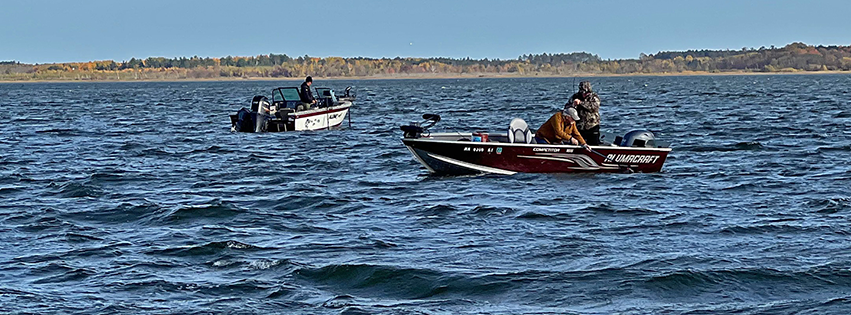
Fall walleye fishing action ramping up on Lake Winnie
Well folks, it’s here; the ruffed grouse hunting season. As we welcome friends and guests who arrive to share time in the woods, we say goodbye to everyone who visited us to wet a line. Our fishing season, for the most part, is closed.
As a going away present, the walleyes ramped up their activity level this past week offering late season anglers something to remember them by. Shallow water, filled with clouds of tiny, young of year perch attracted good numbers of walleyes, along with a smattering of jumbo perch and some nice sized northern pike. A lingering algae bloom, water temperatures in the mid-to-upper 50s and breezy conditions provided incentive for fish to feed longer, and more intensely than they have in recent weeks.
Reports from anglers and guides who fished on Lake Winnie concluded that there are still a lot of walleyes from the 2018-year class. Predominated by fish in the protected 18-to-23-inch slot, the class of ’18 gave folks plenty of opportunity for great catch and release photos. Less dominate, but present in reasonable numbers are the walleyes from the 2023-year class. These fish, now in the 16-to-17-inch range provided “keepers” for the folks seeking fish to eat.
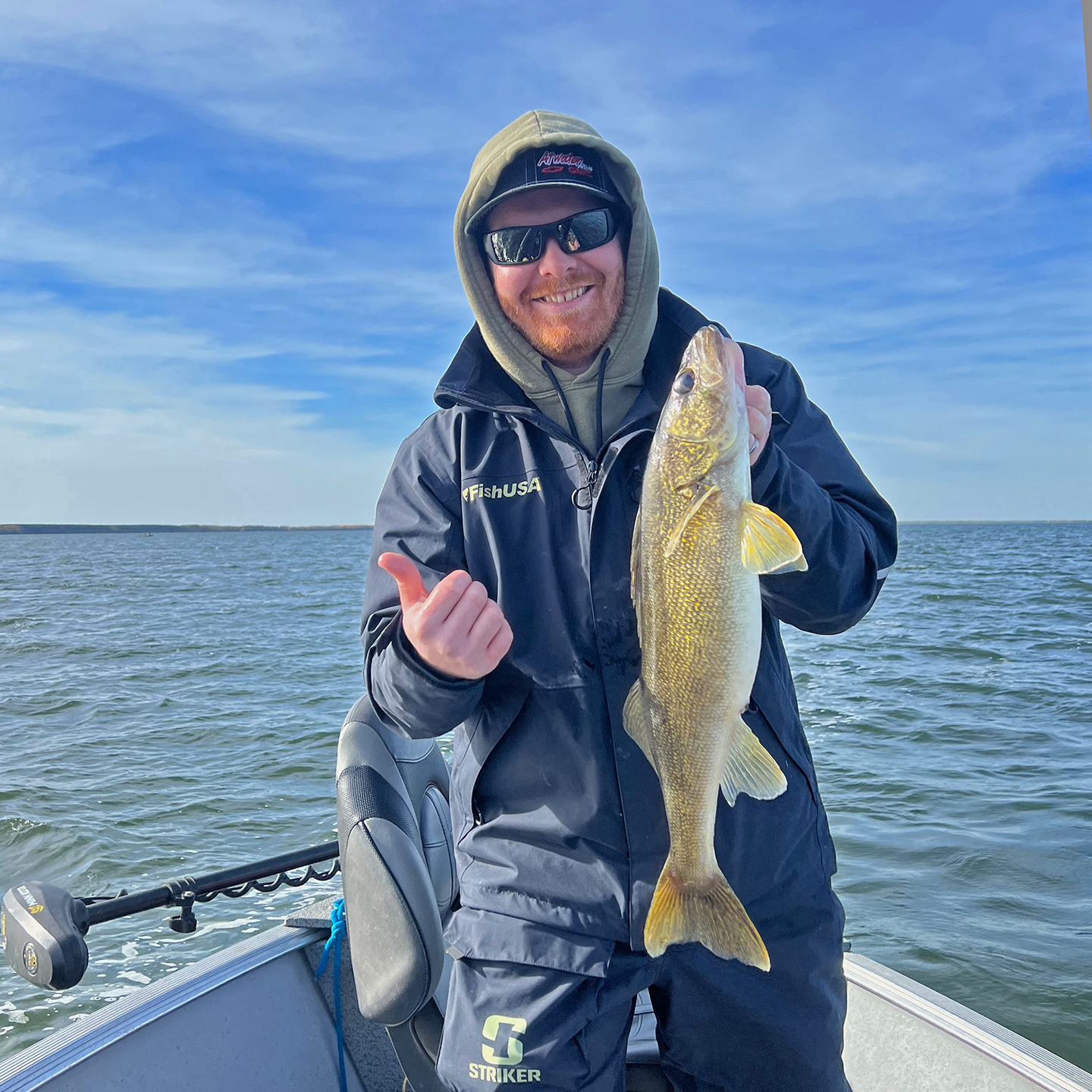
Fat and Happy, well fed Lake Winnie Walleye!
Occasionally, walleyes over the protected slot size turn up too! Notice the fat belly and stout build of this one, caught by Robert Cooper on a recent guided fishing trip. Winnie Walleyes, virtually all of them, resemble the physical condition of this one, the lake is packed with food, and the fish are eating like mad. Growing fast, more fish from the 2018-year class will grow into this size range very soon.
It’s been rare for fish to bite all day long, so anglers have had to move, search, and be creative to capitalize on the bounty. But for those who put in their time, walleyes found somewhere, and at some time of the day rewarded them for their efforts.
Key depths have ranged anywhere from 5 to 12 feet deep, and shoreline breaks with the presence of low-lying vegetation have been one key location. Secondary locations include rocks, shallow rock rises on sandy, or wind-blown gravel flats have been productive as well.
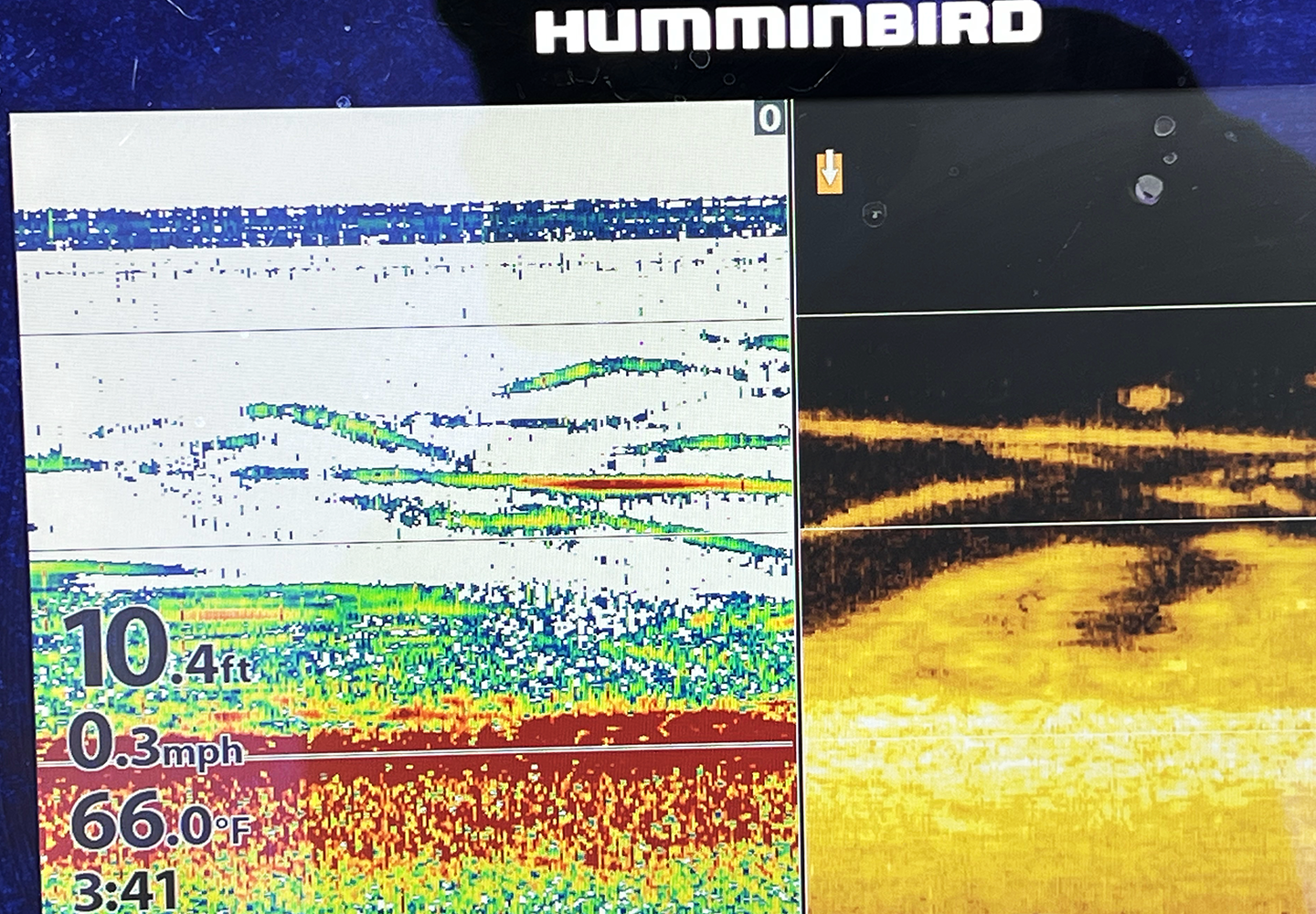
Shallow water flats with low lying vegetation are loaded with minnows, and walleyes
Deep water breaks, mid-lake bars and sunken islands have failed to produce walleyes, or any other fish reliably this fall. According to Dan Schermerhorn, the MN DNR large lake specialist who oversees fisheries activity on our chain of lakes offered a likely explanation. “There appears to be a massive hatch of perch this year and those young, 1- to 2-inch-long perch live predominately in the shallows. Walleyes go where the food is, and the young of year perch are most likely what’s holding them in the shallow water.”
We think that reduced water clarity due to the heavier than typical algae bloom Is probably helping hold walleyes shallow too.
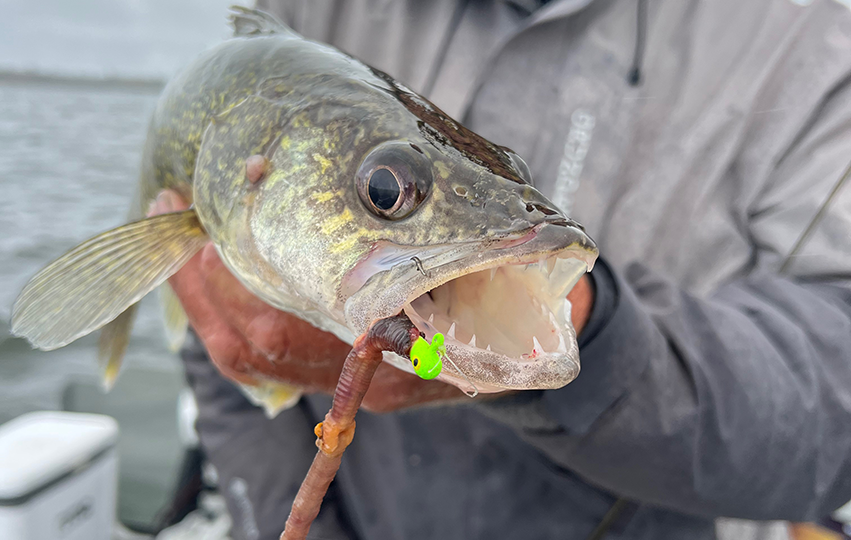
One presentation that dominated in recent weeks was the jig and night crawler, “Wiggle Worming”
Presentations vary from spot-to-spot and with the time of day, but there are 3 that will serve you well. Jigs, 1/16-to-1/8-ounce sizes, tipped with cut night crawlers have been very productive. Drift, troll or cast and retrieve the lures using a wiggle-swim-wiggle-swim retrieve. Using ½ night crawler lessens the need to “feed” line to catch fish. Using whole night crawlers is effective but will require “feeding” or paying out line to be sure that the walleye fully engulfs your offering. For a tutorial on fishing with jigs and crawlers, we suggest reading Jeff Sundin’s article Wiggle Worming 101.
Jigs and minnows are becoming more effective, but making sure your minnows is the right size is critical. Feeding primarily on small perch, walleyes need to see something that stands out. Getting their attention with small, dull looking minnows offers little attracting power. Shiners, rainbows or red tails in the 3-1/2 to 4-1/2-inch size range will get the fish’s attention. Use the same 1/16- or 1/8-ounce jigs head and troll, drift or cast and retrieve using a drop-hop-drop-hop retrieve. Paying out line to a striking walleye is seldom required but may be a good idea when using larger than average size minnows.
Trolling crankbaits has been effective too, especially for anglers fishing during low light periods, or after dark. Shallow running stick baits like the original Rapala minnows are effective. Berkley’s #5 or #7 Flicker Shads, Shad Raps, Salmo Hornets or Rebels are solid choices too. Be creative using whatever you already have on hand. Troll at slower speeds, ideally in the 1.4 to 1.7 MPH range.
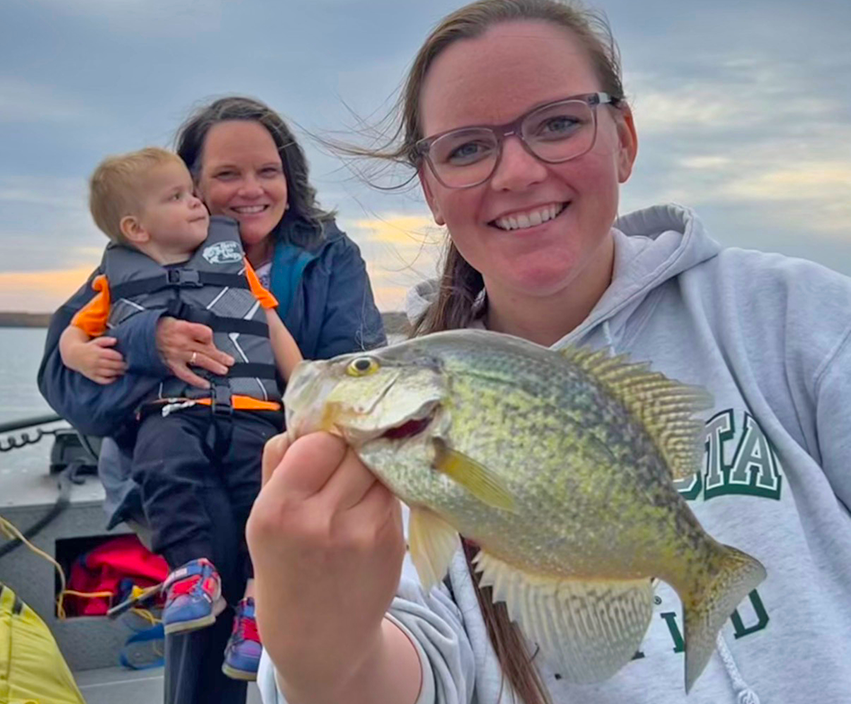
Crappies have been available for anglers in recent weeks as well. Most anglers have chosen to search for them in both Little, and Little-Little Cutfoot but there are fish being found in Big Cutfoot, and even on the big lake at times too. In Big Cutfoot and Lake Winnie, deep vegetation still holds some crappies, but steep breaklines located adjacent to shallow cabbage of coontail flats are more productive.
In the Little Cutfoot chain, most crappies are now located over the open water, mid-lake basins.
Anglers are using a variety of presentations to catch crappies. Anglers without advanced electronics can search for schools of fish using spinners tipped with minnows. Once located, larger schools of fish may be targeted using 1/16 or 1/18 ounce jigs tipped with plastic tails. Cast and retrieve usings a drop-swim-drop-swim retrieve.
Sharp shooters, anglers using forward facing sonar search for pods, or small schools of fish. Once located, fishing with jigs and minnows suspended below slip-bobbers have been effective. Casting with the jigs and plastic combos is effective too.
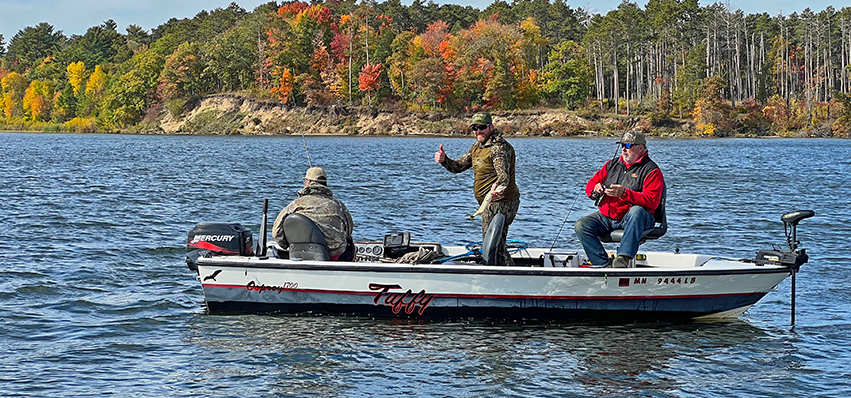
Northern pike have been illusive and nomadic too. When you locate them though, they are of good quality for harvesting. Like the walleyes, pike have been gorging on minnows and they are in great condition. Even shorter fish in the 20-to-21-inch size range are fat and girthy, well worth the effort of cleaning. There aren’t a lot of large pike in the system right now, but fish in the 27-to-28-inch size range do occasionally turn up.
Most of the better pike action occurs while anglers are trolling crankbaits for walleyes. Jigs and minnows account for some decent catches too and while not the dominate presentations, trolling spinners tipped with minnows can also be effective. Seeking only the larger pike can be accomplished by using live bait rigs and large minnows. Using a quick strike, 2-hook leader and either creek chubs or sucker minnows in the 10-to-12-inch size range is ideal. Consider that northern pike prefers forage that are about 25 to 30 percent of their body length. So, a 30-inch pike would easily eat a 10-inch minnow.
Present the live bait rigs by drifting or trolling along steep breaklines adjacent to shallow sand flats, along rocky patches, or on points that extend from shore, out into the lakes deepest water.
Jumbo perch has been illusive and targeting them can be frustrating. At times, anglers fishing for walleyes stumble into schools of perch. If that happens while you are walleye fishing, and you like to harvest perch for the table, then stop what you’re doing and take advantage of the opportunity. Coming back to find them later is an outdated concept that rarely pays off these days. The better size fish are nomadic, spending their time prowling the shallows in search of the hordes of young of year perch minnows.
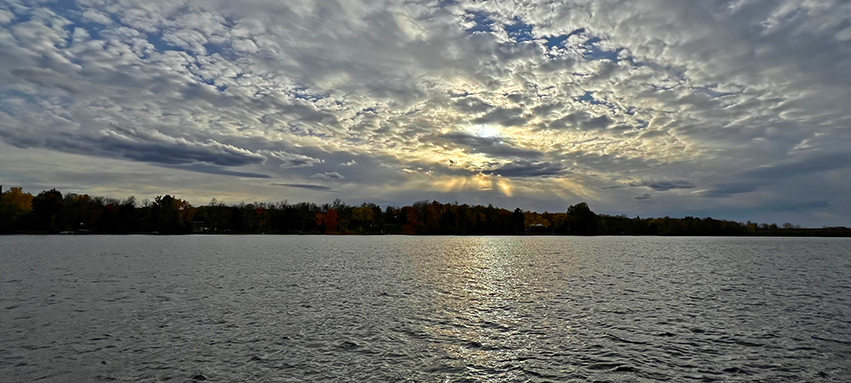
Sunset over the shoreline of Cutfoot Sioux, a fitting way to close the 2026 fishing season
We hope you’ve had a great time fishing on the Lake Winnibigoshish chain of lakes this season. We’ll miss seeing you over the winter, but as always, the time will pass quickly and before we know it, the 2027 fishing season will be upon us. We’d love to see you again next summer, and its never too early to plan a fishing trip. Be sure to let us know when you can come, and we’ll help you find the perfect accommodations for your group.
Have a great winter, we’ll see you soon!