
Summer fun at the beach far surpasses the pursuit of fish this week. Warm water, sunny skies and calm seas have encouraged our guests to take advantage of the chance to relax on the lake. Still, there are a handful of anglers angling, and for them, results have been mixed.

Autumn Braidey with a 27 inch walleye
Walleye fishing has been both time, and weather dependent. Early morning, or late evening, along with cloudy and breezy days find walleyes active and catchable. Sunshine, calm seas and warm water temperatures send them into the doldrums, and they seemingly disappear.
It can be tempting to use the term “not biting” to describe walleye activity. But biting too well, that is more likely what the problem is. With surface temperatures now ranging between 75 degrees in open water, and 79 degrees in protected, dark water bays and flowages, fish metabolism is running hot. At the same time, food supplies are at their peak and that adds up to easy pickings for active walleyes.
During prime time, walleyes go on the prowl and get all the food they need in short, intense feeding bursts. With stomachs full of food, walleyes simply sit out the periods when conditions do not favor productive feeding. This helps explain why it can be easy to view fish on electronics, but difficult to tease them into striking.
Folks who have fished Winnie for a long time know that this situation is about to change.
With every day that passes, predators consume more baitfish. Insect hatches run their course too, further reducing the available food supplies. Sometime during the next few weeks, reduced food supplies, combined with the early influences of fall will begin shifting the balance. More walleyes will compete for less food, and they will become more vulnerable to angling.
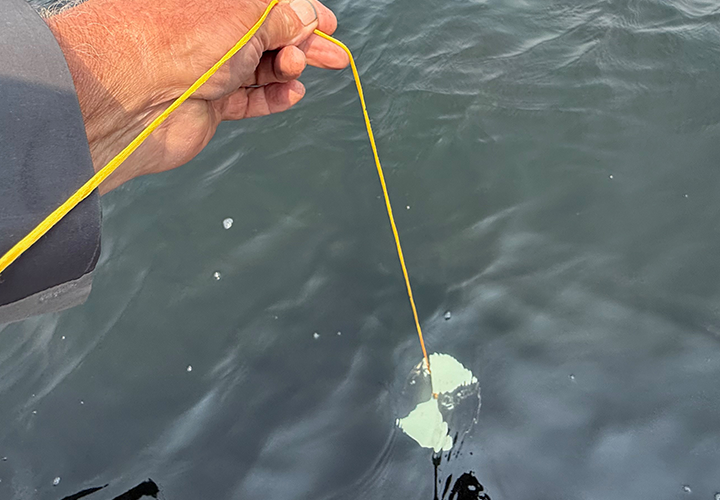
Last week, we mentioned that the Secchi disk reading, taken offshore on Winnie was about 11 feet. Today, thanks to heavy algae blooms, the water clarity is reduced even more. Now we’re looking at water clarity of 8 to 9 feet on the main lake, even less in the dark water flowages and shallow, weedy bays. The reduced clarity, added to walleyes natural instincts to feed will help improve daytime fishing action.
At the time, we wrote, “For now, finding vegetation is one secret to consistent fishing action. Heavy growth, like stands of cabbage and coontail hold perch, sunfish and pike. Less dense stands of submerged plants like flat stemmed pondweed, and other pondweed varieties are holding some crappies, more pike and at times, walleyes.” This advice remains good for folks seeking a mixed bag of “eating size” fish. Finding patches of vegetation, no matter the depth, will be the key to fishing success in the coming days and weeks.
Folks searching for larger fish to catch, photo and release should search for them on the lake’s larger bars. All the names you’ve heard before are in play, Moses Bar, Horseshoe, Bena, Center and Sugar are holding fish. There are fish on some of the larger free-standing humps too, but the smaller ones are less populated with walleyes now.
Spinners, tipped with minnows or night crawlers continue to produce not only walleyes, but pike, perch and panfish too. Spinners will be a mainstay presentation for anglers, as long as water temperatures remain warm. Fishing spinners in deep water require bottom-bouncers, or other heavier weights. In 20 to 25 feet of water, 2 to 2-1/2 bouncers will be ideal. In shallow water, use bullet sinkers in the 1/8 to ¼ ounce range to keep your spinners running above the weed tops.
There are more folks trolling crankbaits on the big lake these days. They are targeting fish that spread out across the flats or spread out horizontally along the secondary breaklines along shore. Key depths range from 12 to 18 feet of water, so crankbaits that run 8 to 12 feet deep are ideal. For some, using planer boards to keep lures running away from their boats is effective. Planer boards, if you have them, can also be used successfully when trolling spinners as well.
Wiggle worming has been a productive presentation for folks who targeted walleyes on Cutfoot Sioux. So has Lindy Rigging with lively leeches, or air injected night crawlers.
Jigs and minnows, while not the favorite crowd during mid-summer are being used by some and have been productive. The best times to try jig and minnow presentations is when there’s a good breeze for drifting. Whether you fish them in the weeds, or over the rocks, they will produce a mixed bag of fish. Getting good minnows is not easy right now, but some of the bait shops offer golden shiners, and others have a “river mix” that includes several varieties of minnows. Select minnows in the 3-to-4-inch size range, and you’ll be okay.
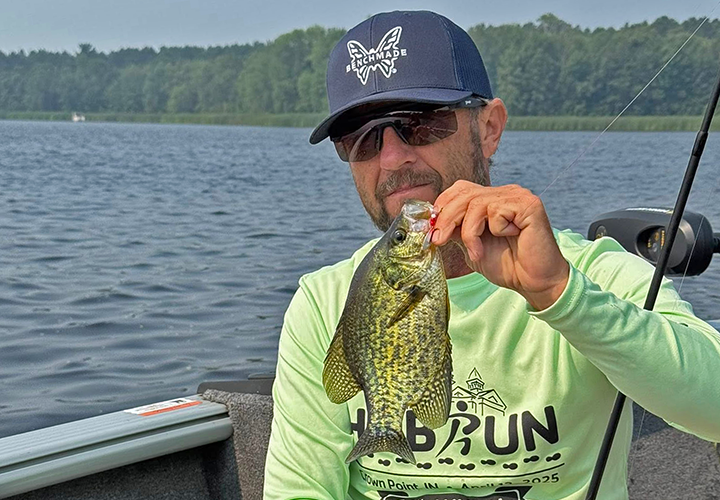
Crappies remain somewhat illusive, but there are more catches being reported now, than there were earlier this summer. Like walleyes, they have been much easier to catch during low-light periods, and we suggest fishing during the early morning. On a calm and quiet morning, baitfish and predators too, can be seen working over the tops, and along the edges of cabbage and coontail beds. Casting spin-jigs like beetle spins or throwing small jigs tipped with plastic tails are productive. A 1/16 or 1/8 ounce live bait jig tipped with ½ night crawler can also be deployed, and will produce a mixed bag of walleye, crappie, sunfish and more.
Anglers complain about a lot of small perch in the system right now. It is true, there are legions of perch in the 5-to-6-inch size range, and recently they have been all too willing to strike. Today’s problem is tomorrow’s solution though, and with all these young perch in the system, we will be enjoying some great perch action in another season or two. In the meantime, there are isolated pods of good size perch, and they are biting. Vegetation like eelgrass, and wild celery seem to hold the better size fish right now, but on windy days, they will roam shallow rock and gravel structures too.
For perching, use spinners tipped with minnows to search for fish. When located, stop and fish with jigs and minnows, lindy rigs with minnows or jigs with cut pieces of night crawlers.
Some folks prefer to focus on northern pike, and we’re seeing an uptick in pike angling, mostly on the big lake. Shoreline patches of cabbage, coontail and pondweeds are holding fish, and are targeted by most. Casting, using jerk-baits, paddle tails and large swim baits has been effective. Trolling with shallow running stick baits, like large rebels, Rapalas and Smithwick’s are productive. Large boobers used to suspend sucker minnows of the weed tops are effective too. When drifting is an option, one angler can watch a bobber while another one, or more, casts for pike.
Alternatives to working the shallow vegetations include trolling crankbaits on the flats, and lindy Rigging with large minnows on the steep drop-offs along mid-lake bars.
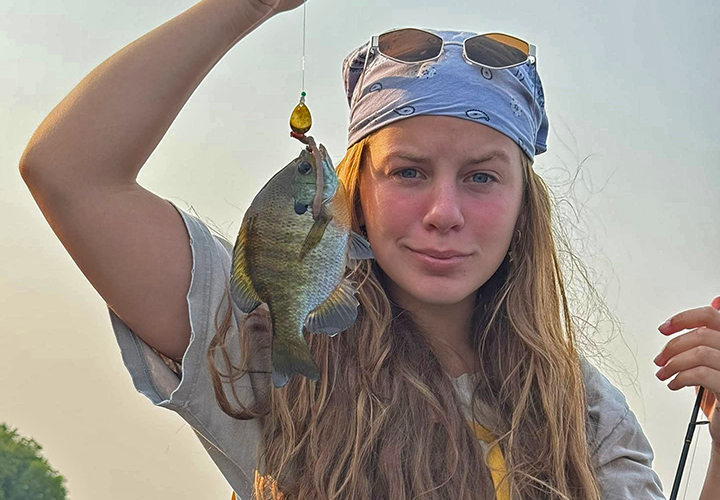
Sunfish remain active, and with the warm water, can be easily located using spinners tipped with either night crawlers or small leeches. Toll the edges of vegetation until bluegills are located, then stop the boat and use small jigs tipped with cut pieces of night crawler. Using clip on floats to hold your bait in place can be effective. Also, tight lining with small jigs will be effective. Drop your offering over the side of the boat, hold your rod tip steady and wait for a light tick.
We encourage you to participate in the Minnesota DNR Fisheries Walleye Bag Limit Reduction Proposal Survey. Minnesota DNR Fisheries Chief, Brad Parsons, announced his plans to go forward with a statewide walleye possession limit reduction. The deadline for participation in the online survey is August 15, 2025, and this is your last chance to influence how the formal proposal will be offered.
The official period to receive public comments will come once the formal proposal is introduced. At that time, anglers will have an opportunity to say yes, or no, to whatever formal rules are set into motion.
Regardless of your point of view, be sincere and let the DNR know what it is. We also suggest that you be prepared to make additional comments when the regulatory public comment period begins.