
The walleyes are trying to cooperate, they really are! Last week, they’ were “stacked up” along the upper edges of main lake breaklines as they migrate away from the shallows, toward deeper water. On a recent fishing trip, Larry Lashley and his crew reported, “We could see the fish swimming under the boat. Fishing at the Sugar Bar, 14 to 16 feet of water was full of fish. We caught some of them. But struggled to get most to bite, but they were definitely there, and one of these days, we’re going to figure out how to catch more of them”.
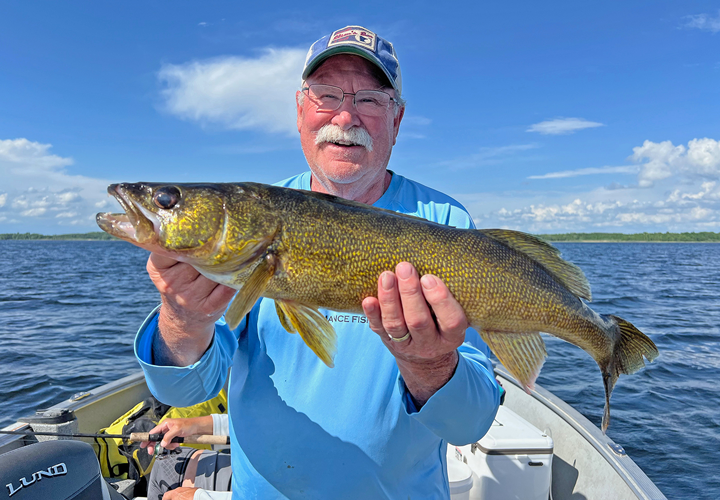
Seeing the fish, watching them swim around under the boat is exciting, and it helps boost confidence that an angler is fishing in “the right spot”. That’s one good thing, but that same ability to see the fish also points to a problem; ultra clear water. If we can see the fish, then they can see us too and when they’re alerted to our presence, they become more difficult to catch. So, if your goal is to catch walleyes, then working out how to present a lure to them before they detect your presence is the key.
Obviously, a lot of anglers have turned to advanced electronics to help solve the problem. The proper use of forward-facing sonar will allow you to see fish before your boat passes over them and that is a big advantage. Still, just seeing fish on your screen, as many pros report, doesn’t mean that you can trigger them to strike. Often, fish can detect the “ping” of the powerful sonar beam, and the effect is equal to them detecting you visually; they become alert and less likely to strike.
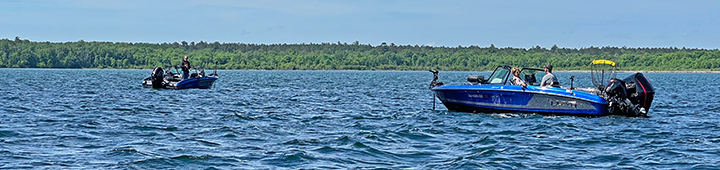
Remember our report last week? In it, we offered this, “An important lesson to remember is that despite being heavily pursued, those “boat shy” fish must still feed at some point on most days. So, the trick to success is to be the first, or among the first wave of anglers to discover any “fresh” school of fish.”
Despite what many will say, how you accomplish being the first, or in the first wave of anglers to discover “fresh schools of walleyes” is not dependent on having advanced electronics. There are several ways to present lures to fish before they become alerted to your presence. Probably the easiest “work-around” is to fish at night. One angler, checking in with us at the fish cleaning station said, “I don’t even go out during the daytime, I just wait for the sun to go down and start fishing then,”
Fishing in the dark is fine for the “hard core” walleye anglers. For them, catching fish is the highest goal and other parts of the fishing experience are less important. Not everyone enjoys fishing at night though, and we understand that. It can be cold and clammy in the dark, there can be more insects to fight off and there are additional safety considerations too. That’s not for everyone, is it? Discomfort and safety concerns are why we seldom encourage the more casual anglers to participate in night fishing.
Daytime anglers who don’t have the tools for “scoping fish” should consider the advice of one veteran guide who fishes on Lake Winnie frequently. “Follow the breakline using your trolling motor, or a drift sock to make a slow, controlled drift. Cast your lures out and away from the path of your boats travel. Retrieve the lures along the upper edges of shoreline breaks, or the edges of main lake bars and humps. Known fish holding locations like rock piles and cabbage patches can be approached the same way. Be prepared before you approach structure, then sneak up on the structure, cast your lures toward it and retrieve along the edges, over the tops of vegetation or rocks or into the gaps between heavy patches of cabbage, coontail or other submerged plants.
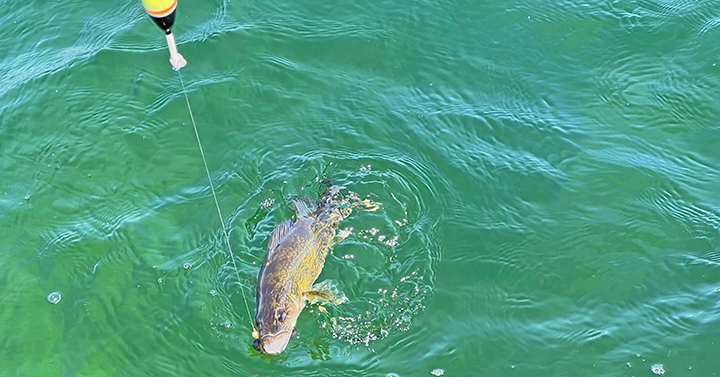
One of the most reliable presentations last week was slip-floats and live bait. Small 1/32 ounce to 1/16-ounce jigs tipped with ½ night crawlers of large leeches have worked well. Jigs and minnows, or jigs tipped with plastics continue to be effective too, and so do 1/8-ounce jigs tip with night crawlers. On a recent trip, one group of anglers reported catching a few fish on every one of these presentations on the same day. So, avoid becoming dependent on any one presentation, and be willing to experiment with alternatives.
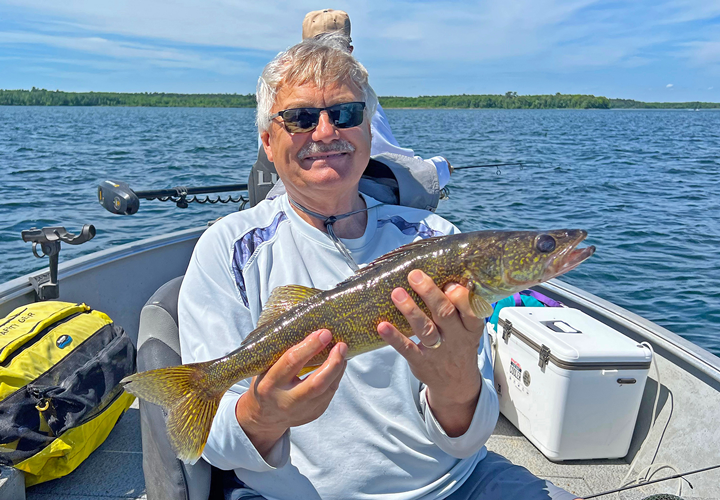
The advice we offered last week remains in effect. “Creeping along at slow speeds and casting lightweight jigs is still an effective search method. Retrieve the lures using a light hop-drop-drop-hop-drop retrieve until contact with fish is accomplished. Then stop the boat, anchor or spot-lock and switch over to one of the slip-bobber presentations. Other search baits, like in-line spinners tipped with trailing night crawlers, can be effective too. Experiment with suspending style crankbaits as well, make long casts, allow the baits to fall for several seconds and then retrieve using a twitch-stop-swim, twitch-stop-swim style retrieve. No matter which presentation you use, keep your lures out and away from the boat, concentrating on finding fish before they detect your presence.”
Northern pike have been on a rampage recently and anglers searching for walleyes are catching lots of them. The Larry Lashley group used northern pike to prepare several “shore dinners” last week. Fried, blackened, broiled, baked, smoked or pickled, pike are a delicious and useful source of protein that should not be overlooked.
Most of the northern pike caught recently have been the by-catch of walleye fishing. Probably the most exciting way to target them right now is to use 1/8 to ¼ ounce jigs tipped with large plastics. Lures in the 3-1/2 to 5 inch range are effective, and bright colors like yellow-orange, lime-yellow and orange-black are good combinations. Lures like Berkley’s Ripple Shad, Northland’s Eye Candy, Keitech Minnows, and others will produce good results. The jigs heads to use can be any of the longer shanked hooks in the 1/0 to 3/0 size range. Use an aggressive snap jigging presentation to trigger strikes.
Spinnerbaits, rattling style crankbaits or “Rippin’ Raps” can also be used, especially in patches of vegetation. Use steel leaders, or at least a leader made of 20-to-30-pound fluorocarbon to protect your expensive lures from “bite-offs”.
Finding vegetation is the secret to finding perch right now. Eelgrass beds are developing and perch love this type of cover. Other low-lying grasses, or even cabbage patches will hold perch as well. Once located, anchoring and still-fishing with tight lines are effective presentations. Trolling with spinners tipped with minnows is also a good presentation for perching, especially when used as a search method.
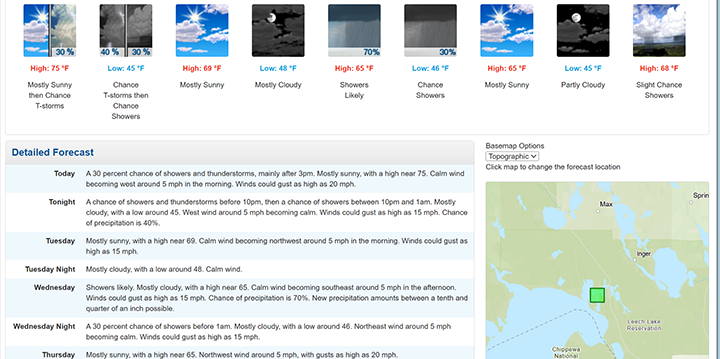
This weekend, cool and highly windy weather was a setback for many. The weather forecast going forward appears to be more moderate, and we’re looking forward to a re-start of early summer fishing patterns. Soon, insect hatches “should” begin occurring around the lake. That is typically the time when walleyes move toward deeper, mid-lake structures. When this happens, anglers will enjoy the benefits of fish holding in somewhat deeper water. Watch for updates and advisories as the conditions evolve.
Remember, you’re always welcome to pay us a visit. We have a great boat ramp, live bait, boat fuel and tackle. And for folks in the market for quality cutlery, Bowen Lodge is a Benchmade dealer. The water series fillet knives, along with dozens of other Benchmade products, are available here, in our lodge. Whether we see you or not, we wish you good luck on the lake!