
Here we are, rolling into our final week to prepare for the Minnesota Fishing opener! Thank you for visiting us, we’re excited to share our optimism for a great fishing season on the Lake Winnibigoshish and Cutfoot Sioux chain of lakes! In today’s report, we’ll offer an overall season outlook aimed at helping you plan your open water fishing season.
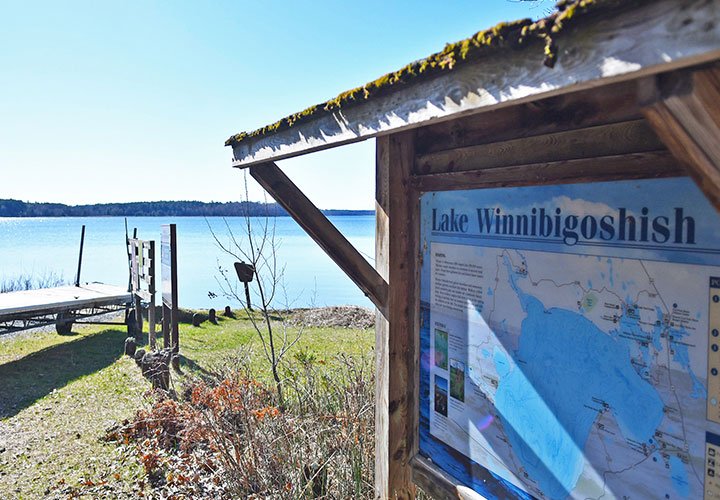
One of the exciting developments for 2026 has been the formation of the Winnibigoshish Fisheries Input Group (WINFIG). The input group, formed by the Minnesota DNR, Grand Rapids Area Fisheries Manager, Brett Nelson during late fall, 2025. The goal? Gathering input from area resort owners, fishing guides, and statewide anglers to help shape the upcoming “10 Year Fisheries Management Plan” for the Winnibigoshish chain.
To that end, Grand Rapids Area Fisheries Supervisor, Brett Nelson, along with Large Lake specialist, Dan Schermerhorn, and the Northeast Minnesota Region 2 Fisheries Manager, Dave Weitzel conducted meetings with the WINFIG group throughout the winter of 2026.
Best summarized by an introductory article featured on the FishRapper from October 2025, Working the Work-Able for Lake Winnie, “The input provided by the Winnie workgroup does not directly lead to a full plan, that will be in the hands of fisheries staff. But group members will provide guidance aimed at helping shape the DNR management goals that reflect public sentiment.”
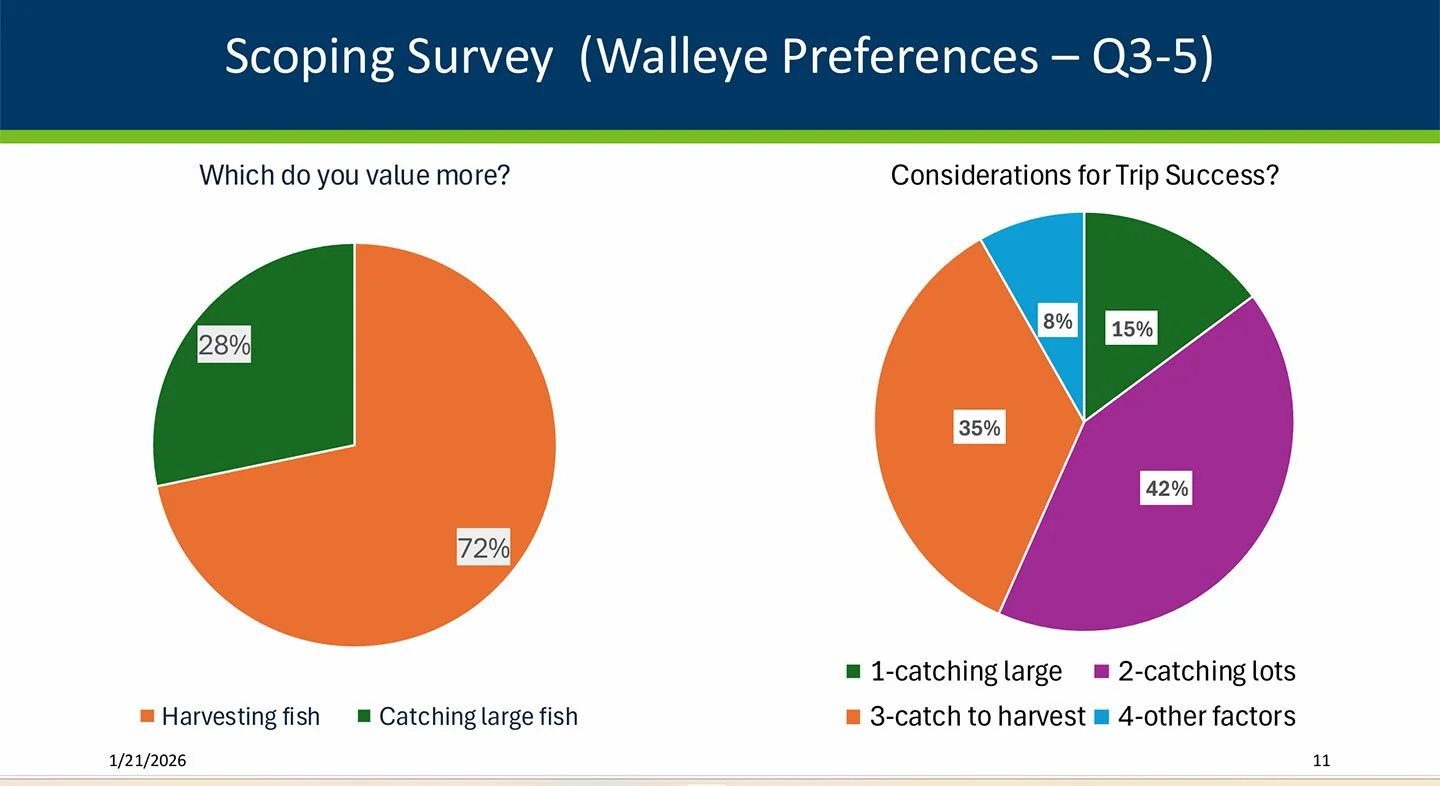
Along with guidance from the WINFIG group, DNR Fisheries staff also published a survey aimed at the public. Anyone with an interest in fishing Winnibigoshish, Cutfoot Sioux, or connected waters was invited to participate in the survey. The survey was available on the MN DNR website, and announcements offered through DNR news releases, social media sites, fishing publications and word of mouth invited anglers to participate.
Throughout the upcoming season, we’ll share more information about the WINFIG group, but for today, let’s focus on highlights from what we learned this winter about the Lake Winnie chain’s fish populations, size structures, water quality and fish habitats.
Walleye populations, always a key topic of concern for Winnie/Cutfoot anglers are holding up well. Most of the still dominant 2019 class of walleyes have now grown into the 18-to-23-inch protected slot. That means it should be a great summer for catch, photo and release walleye fishing! That said, anglers will likely notice a decline in the number of “keeper” size, 14-to-17-inch fish from the 2019-year class.
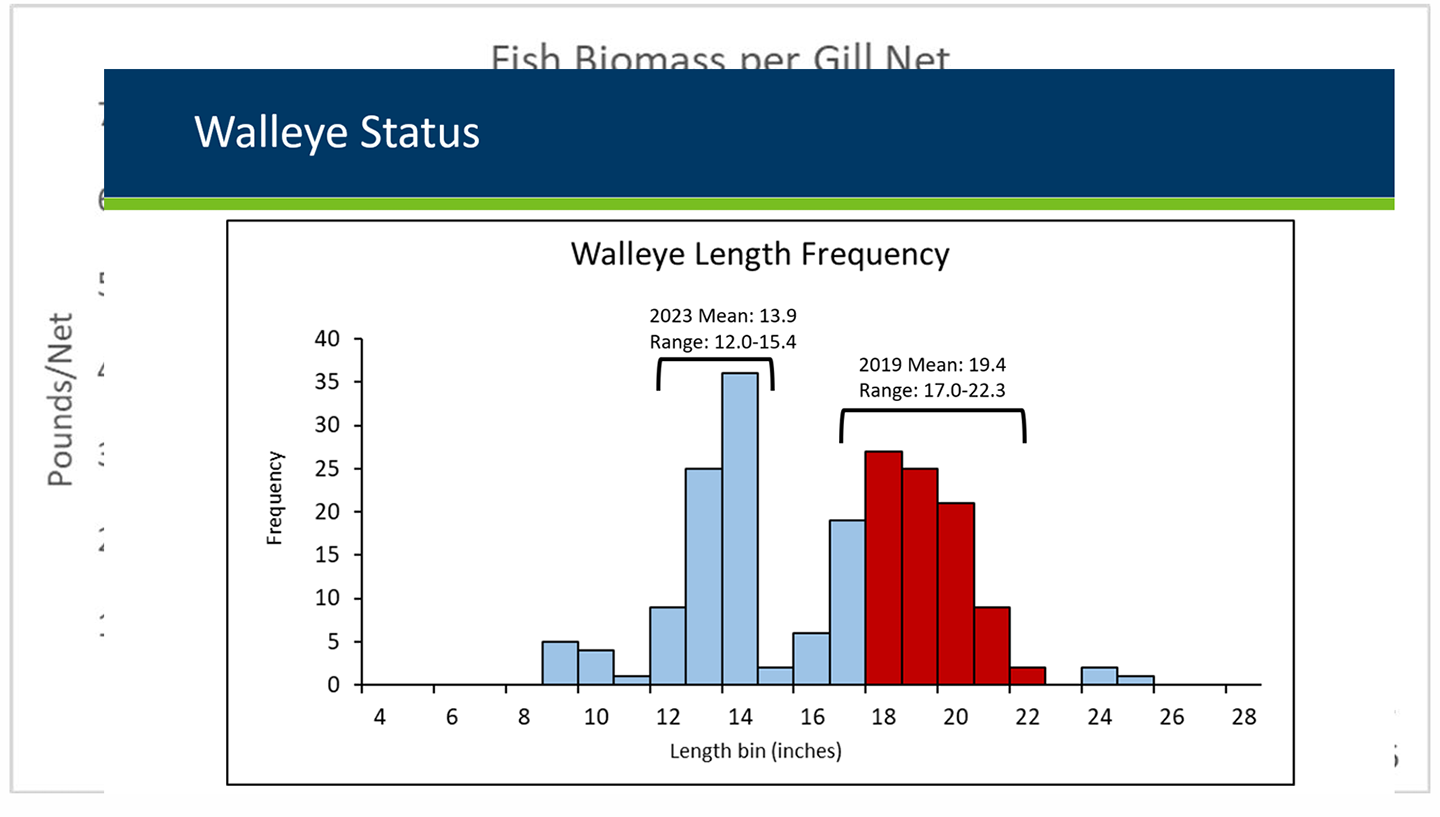
MN DNR Fisheries testing during 2025 revealed that there appears to be a “decent” year class of fish born in 2023. Earlier this year, in presentations offered at public meetings, there was a common belief that previous test net results from both cut foot and Lake Winnibigoshish showed a 2023-year class that is above average, but not massive. Confirmed again, just this week by fisheries staff conducting the Cutfoot Sioux, Walleye Egg Take operation, good numbers of smaller, 12-to-13-inch size walleyes did show up in the traps. For the most part, these small fish were sexually immature, and not ready to spawn. So, these 2023 fish are not likely to be prime targets for angling this summer. They will grow though, and by next spring, will begin providing both spawning stock for the lakes, and eating fish sized for anglers to harvest.
In a conversation Dan Schermerhorn, large lake specialist, testing results from the summer and fall of 2025 revealed walleyes from 12 separate year classes. So, while there my not be any huge single year class of fish, anglers will probably notice a good mixture of different sizes. Anglers concerned with catching “eaters” will likely find them among this wider variety of year classes. Instead of catching limits of similarly sized fish, there should instead be a few from each of several moderate year classes for anglers to harvest.
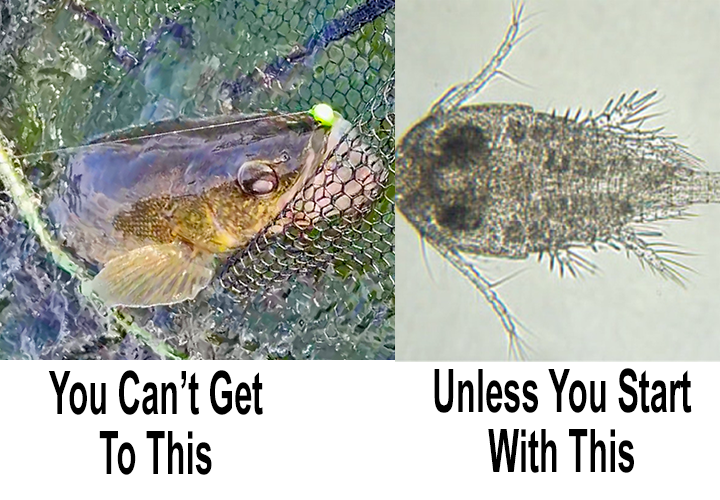
Winnibigoshish has historically been known for the fast growth rates of its walleyes, and other fish. Recently, there have been signals that growth rates have slowed on the big lake. The slower pace of fish growth is likely a sign of the impact of zebra mussels on the lake’s water. The inflow of super-clear water from Cass Lake, via the Mississippi River, combined with the presence of invasive “filter feeding” Zebra Mussels, and Faucet Snails points to declines in zooplankton, a vital primary food source for newly hatched fish and minnows.
To date, fish populations in Winnie and Cutfoot are still “holding their own” and growth rates have been acceptable, but we’ll be watching, and reporting on future developments.
Ironically, clearing water and lower productivity that work against the “open water species”, can also serve to improve habitat for other fish species. Early evidence suggests that sunfish, bass and crappies are finding habitat in areas where it did not previously exist. Finding largemouth bass, sunfish and crappies in open water areas of Winnie is becoming increasingly common. We already know that our guests reported very good sunfish action last year.
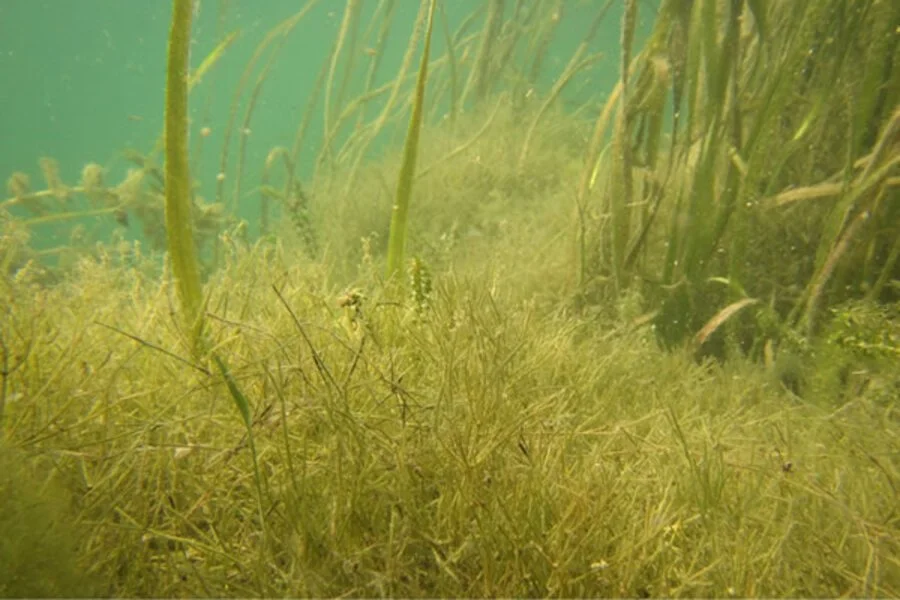
Throughout the upcoming summer, we’ll be watching this trend, and actively seeking input from our guests and friends who fish here. For now, anecdotally at least, we can tell you that catching bass and sunfish will likely be good again this year.
Crappie anglers struggled here last year, and we’re not sure if they’ll fare better this season or not. Illusive, and nomadic by nature, scattered schools of fish showed up in random locations, and at random times. When anglers found them, they did well, but locating large schools of fish was rare. We already know that producing good year classes of crappies is highly weather dependent and there are seasons when they do not spawn at all.
Last winter, in discussion with fisheries staff, we learned too that there is a correlation between strong walleye populations coinciding with lower crappie populations. Conversely, strong crappie populations may well be an indicator of diminished walleye populations.
Information about crappie populations and location trends is limited. In fact, the most recent harvest survey dated back to 2022. Fortunately, there are creel surveys aimed at gathering harvest data on Lake Winnie and Cutfoot scheduled for this year. In the meantime, we’ll have to watch, listen and learn as our guests share fishing reports from their trips. As always, you can count on us to keep you posted with up-to-date information.
Yellow Perch, another popular target for many of our guests, has been the subject of recent studies. The studies, statewide in scope, reveal that Minnesota’s perch populations are declining in size, but not in numbers. Generally, perch are maturing at younger ages, producing large year classes which in turn, also mature early and produce even more year classes of smaller fish.
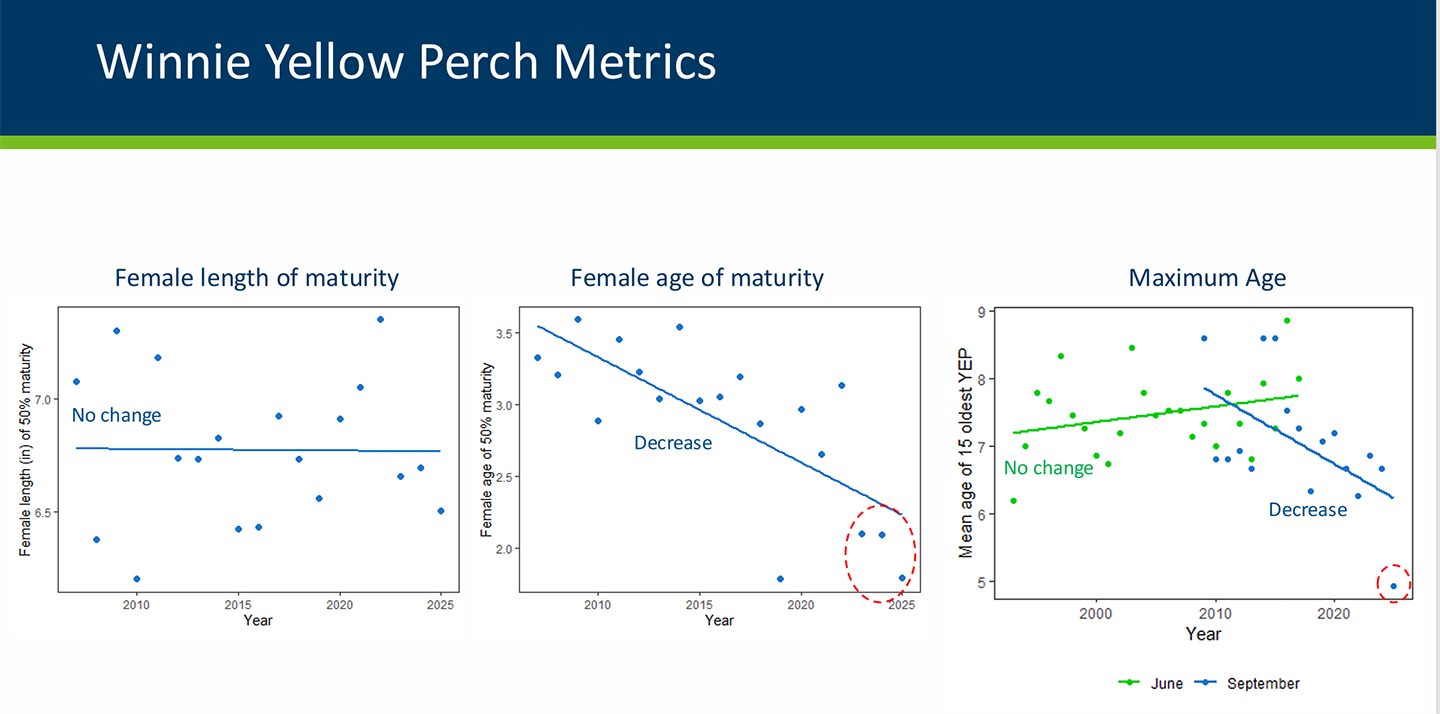
In most Minnesota lakes, that trend is okay because perch are the primary food source for most gamefish species. So, lakes filled with small, baitfish size perch to feed gamefish populations is a good thing.
The conflict happens on lakes like Winnie, which also happen to serve as fishing destinations for anglers seeking harvestable size fish. As we know, fishing for perch in recent seasons has had its ups-and-downs, and the studies may help explain why. Larger populations of small perch, unwanted by anglers, draw little attention. Larger fish, sought after by our guests remain available, but appear to be more elusive.
Again, clearing water, and lower productivity caused by the invasive Zebra Mussels, Faucet Snails and others, appears to be the culprit. That said, the news is not all bad. There is evidence to suggest that growth rates for yellow perch have accelerated. With ample stocks of small fish, there is always a certain percentage of them growing into the acceptable keeper size range.
As a result, anglers do report locating and catching good size fish, often in the 10-to-11-inch size range. Over these past few seasons though, locating them requires an above average effort. Whether or not anything can be done, or should be done, remains to be seen. In the meantime, if you’re looking for decent size perch, they can be found, and we’ll help you when we can.
Winnie’s population of Northern Pike remains strong and has been the subject of much discussion. Fish in the 18-to-24-inch size range, primarily, male fish, are the most plentiful and appear to be growing slightly. The problem is that male pike that grow into the protected 22-to-26-inch size range, rarely, if ever grow out of it. The result seems to be that pike in this medium size range is stacking up, without reaching a harvestable size. Because anglers are apparently not interested in harvesting small, 18-to-21-inch size fish, the probable outcome is more of the same.
While there are some larger female pike in the 26-to-30-inch size range, they have become the primary target for folks who want to harvest pike. So, trophy fish, over 30 inches remain very hard to come by. Expecting the lake to “come around” on its own appears to be too much to ask. If angler intervention to reverse that trend is a goal, then something will need to change.
Conservation-minded northern pike anglers, in unison with fisheries staff, talked a lot about a better plan at the WINFIG meetings this winter. The outcome, possibly, could be the introduction of a “special regulation” for the Lake Winnie chain. If adopted, a regulation aimed at harvesting more male pike, while protecting more female pike, could be the result.
Whether or not any special regulation will be introduced remains to be seen. During the summer, there will be additional sessions of the WINFIG and progress reports about the 10-year management plan. When we learn more, we’ll feature the results in a special article for you.
In the meantime, we do know that the best thing we anglers can do is to utilize the small, under 22-inch mail northern for eating. At the same time, please consider releasing larger northern pike, all of them if possible. This is the only practice that might potentially lead to larger pike that can further help reduce populations of smaller fish. It’s unclear how many small pike are consumed by larger ones, but by releasing larger pike, you are at least giving Mother Nature a chance to work her magic.
There’s a lot more information about Winnie and Cutfoot to share, and we will! Watch for a fresh report every week or so throughout the entire open water season. For today, enjoy making your plans for May 9, 2026, and the Minnesota walleye fishing season opener.
Whether you’ll be staying at Bowen Lodge, or not, we’d like to invite you to take advantage of our boat landing over the fishing opener. The cost is affordable, and we can help you avoid large crowds that will gather at the public boat ramps, especially during the early season. We’ve got live bait, gas, and refreshments too, so be sure to stop in when you’re in the neighborhood.